Solver UX Framework
A comprehensive 5-phase UX methodology for Xylem's Solver platform — transforming research into actionable design through VOC sessions, personas, journey maps, RICE prioritization, and a strategic roadmap through 2027.
Context & Challenge
Unifying 4 E-Commerce Sites Into One Platform
Xylem's Solver platform was tasked with consolidating 4 disparate e-commerce sites into a unified experience targeting $4B in revenue. But design decisions were often made on intuition. There were no baselines, no measurable targets, and no clear connection between user research and product strategy.
I created a comprehensive UX framework with 121 documentation slices covering every aspect of the design process — from initial business goals and stakeholder alignment through research, definition, ideation, and final design specifications. This became the single source of truth for all UX decisions.
Design decisions were scattered across teams with no consistent framework. Each project started from scratch without building on previous research.
VOC sessions happened, but insights didn't consistently flow into design decisions. Research findings sat in documents, unused.
Stakeholders pushed features based on gut feel. No objective framework existed to evaluate impact, effort, or user value.
Teams were reactive — fixing issues as they arose without a clear multi-year vision connecting UX work to business goals.
adjustMy Brief
Create a comprehensive UX documentation system covering the entire Solver Framework — from business goals through final design specs. Build a methodology that connects research directly to design decisions, establishes measurable KPIs, and provides a strategic roadmap through 2027.
Key Decisions
Strategic Choices That Shaped the Framework
Building a UX framework for a $4B platform required making deliberate architectural decisions upfront. These weren't just process choices — they defined how teams would work together for years to come.
| Decision | What I Chose | Why | Tradeoff |
|---|---|---|---|
| Documentation format | 121 self-contained slices | Each slice can be referenced independently while maintaining connection to the whole — perfect for a multi-year project with changing team members | More upfront documentation effort, but dramatically better maintainability |
| Research foundation | VOC-first approach with 19 sessions | $4B revenue platform decisions needed solid research foundation — couldn't rely on assumptions at this scale | Longer research phase, but significantly reduced risk of costly pivots |
| Prioritization method | RICE scoring + MoSCoW categorization | Needed objective framework to remove politics from feature prioritization decisions | More process overhead, but clear rationale for every prioritization decision |
| KPI structure | Baseline + target for each metric | Vague goals like "improve experience" don't drive accountability — measurable targets do | Required baseline measurement effort, but made progress trackable and defensible |
| Design system approach | Solver/Foundation (Gravity) system | Unified visual language across 7+ brands — Xylem Blue primary, Dependable Blue secondary, structured gray palette | Initial brand alignment discussions, but consistent experience across all touchpoints |
| Roadmap structure | MVP → V1 → V2 → V3 (2024-2027) | Multi-year vision allows incremental delivery while maintaining strategic direction | Requires long-term stakeholder commitment, but enables sustainable growth |
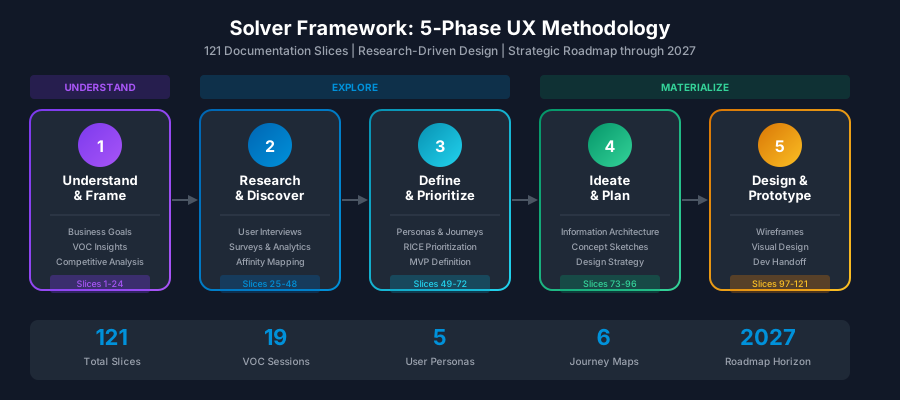
The 5-phase framework architecture with slice distribution and macro-stage groupings
The Framework
5 Phases: Understand → Research → Define → Ideate → Design
The Solver Framework organizes UX work into 5 distinct phases plus an implementation handoff. Each phase has specific objectives, methods, and deliverables — creating a repeatable process that ensures nothing falls through the cracks.
Macro Stage 1
UNDERSTAND
Business context, stakeholders, market landscape
Macro Stage 2
EXPLORE
Deep research, synthesis, opportunity definition
Macro Stage 3
MATERIALIZE
Design, prototype, test, deliver
Understand & Frame
Business goals, stakeholder alignment, success metrics, VOC overview, competitive analysis, problem framing
Slices 1-24
Research & Discover
User interviews, surveys, observational research, analytics, heatmaps, task analysis, affinity mapping
Slices 25-48
Define & Prioritize
Personas, journey maps, opportunity areas, requirements, RICE scoring, MVP definition, roadmap
Slices 49-72
Ideate & Plan
Design principles, brainstorming, concept sketches, information architecture, interaction patterns
Slices 73-96
Design & Prototype
Wireframes, visual design, prototypes, usability testing, design iterations, dev handoff
Slices 97-121
Implement & Launch
Development support, QA validation, launch coordination, post-launch monitoring
Reference phase
analyticsFramework at a Glance
121
Documentation Slices
5
Core UX Phases
3
Macro Stages
2027
Roadmap Horizon
Phase 1: Understand & Frame
Business Goals, VOC, and Competitive Analysis
The first phase establishes the foundation — aligning stakeholders on business objectives, documenting VOC insights, analyzing competitors, and framing the core problem we're solving.
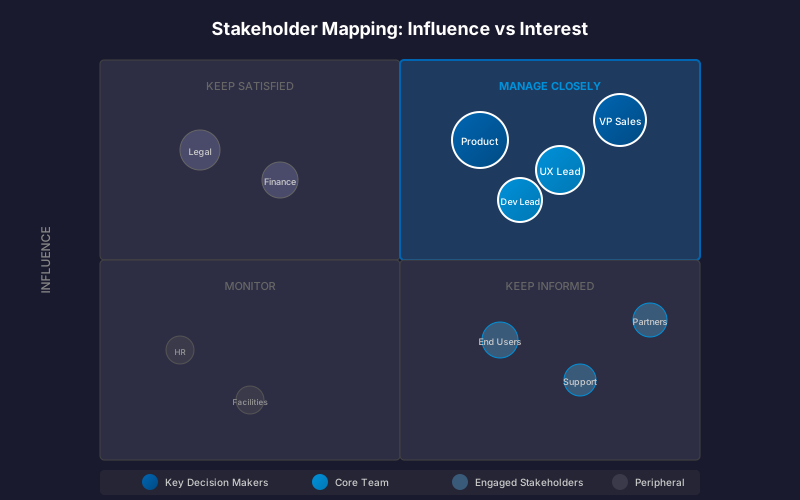
Stakeholder mapping with influence/interest grid and RACI matrix
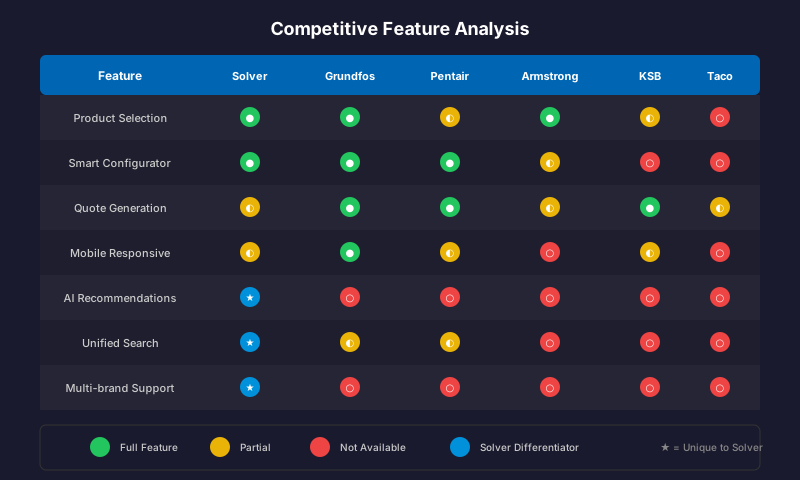
Competitive benchmarking against Grundfos, Pentair, Armstrong, KSB, Taco, Systemwize
groupsKey Deliverables
Business goals documentation, executive vision alignment, stakeholder matrix, success metrics & KPIs, problem statement, market context, competitive feature comparison, VOC overview, customer pain points, and initial hypothesis.
Phase 2: Research & Discover
19 VOC Sessions, Surveys, and Analytics
Deep research phase with 19 Voice of Customer sessions, behavioral analytics, heatmaps, task analysis, and synthesis methods like affinity mapping and empathy maps.
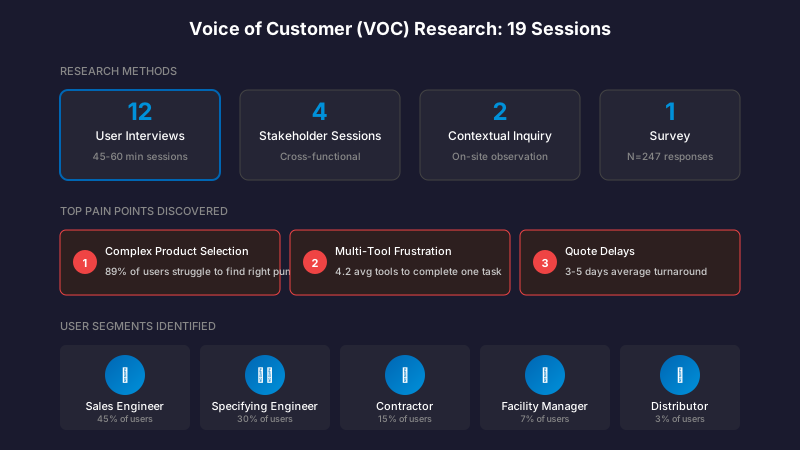
VOC Research overview: 19 sessions across 5 user segments, surfacing the critical pain points driving the platform redesign
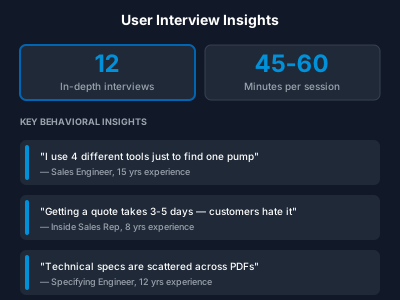
User interview protocol and insights synthesis
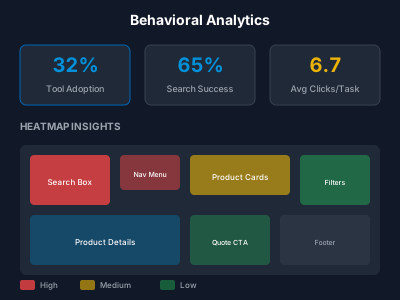
Behavioral analytics and heatmap analysis
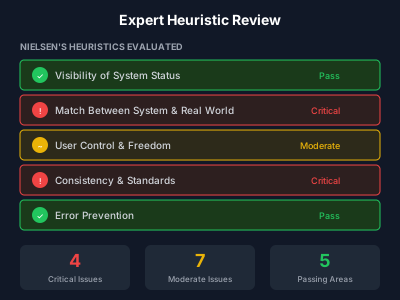
Expert heuristic review and usability audit
Research Snapshot
Voice of Customer (VOC)
19 sessions across user segments
Identified key pain points: product selection complexity, quote request friction, search limitations, and lack of guided recommendations.
Behavioral Analytics
Google Analytics + Hotjar sessions
32% tool adoption rate, 65% search success rate, average 6-7 clicks to complete tasks. Clear opportunities for optimization.
Phase 3: Define & Prioritize
5 Personas, Journey Maps, and RICE Scoring
Synthesizing research into actionable artifacts — personas, journey maps, requirements, and a prioritized backlog using RICE scoring and MoSCoW categorization.
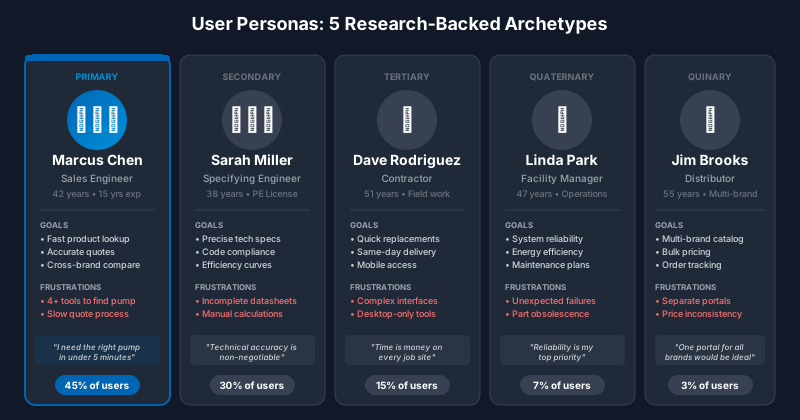
5 personas with demographics, goals, frustrations, and behavioral patterns
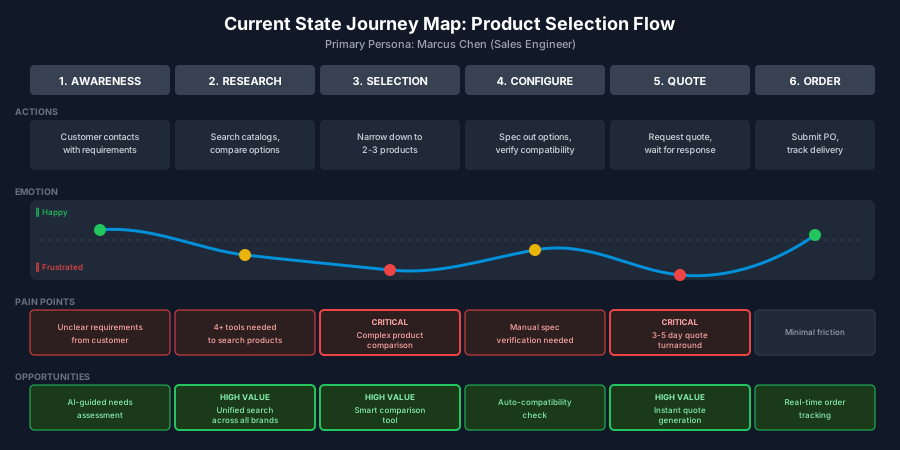
6-stage journey maps with pain points and opportunities at each touchpoint
KPIs with Baselines and Targets
| KPI | Baseline | Target | Measurement |
|---|---|---|---|
| Tool Adoption Rate | 32% | 55% | Analytics tracking |
| Search Success Rate | 65% | 85% | Search clicks / total searches |
| Task Completion | 6-7 clicks | ≤4 clicks | Session analysis |
| Quote Request Time | 15+ min | <5 min | Time-on-task |
| NPS Score | +12 | +40 | Post-interaction surveys |
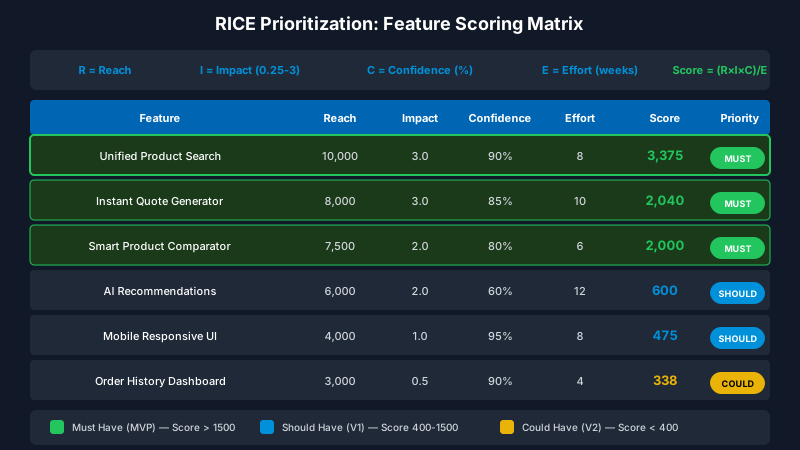
RICE scoring: Reach × Impact × Confidence ÷ Effort
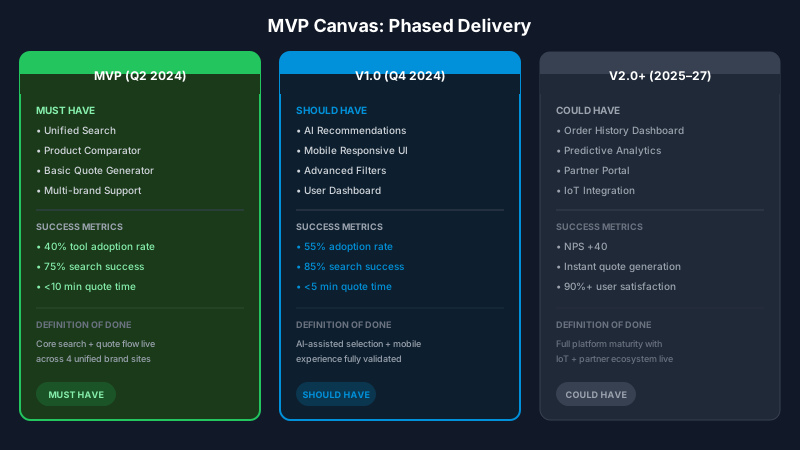
MVP Canvas defining scope, success criteria, and phased delivery
Phases 4 & 5: Ideate & Design
From Concepts to Production-Ready Designs
The final phases take prioritized features through ideation, information architecture, wireframing, visual design, prototyping, and usability testing before dev handoff.
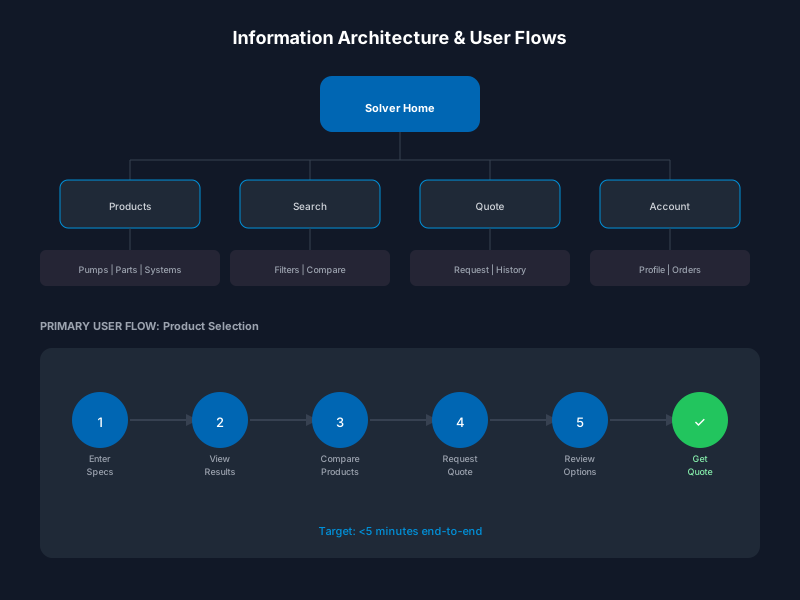
Information architecture — 4-section IA with primary product selection flow
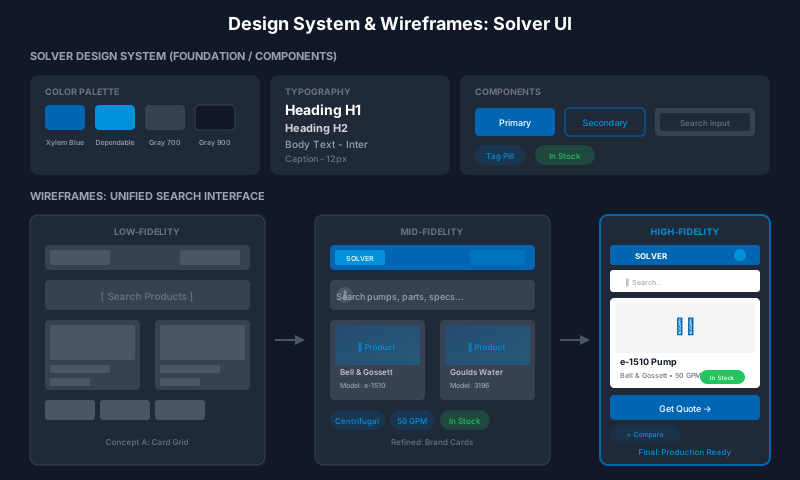
Solver Design System tokens — colors, typography, and core components
paletteSolver Design System
All designs use the Solver Design System (Foundation / Components) — with Xylem Blue as primary brand color, Dependable Blue as secondary accent, and a structured gray palette. Components include elevated cards, comparison tables, tag pills, and flow diagrams with consistent typography hierarchy.
Results & Impact
A Living Documentation System
The Solver UX Framework transformed how Xylem approaches product development — from scattered, opinion-driven decisions to a unified, research-backed methodology with clear accountability.
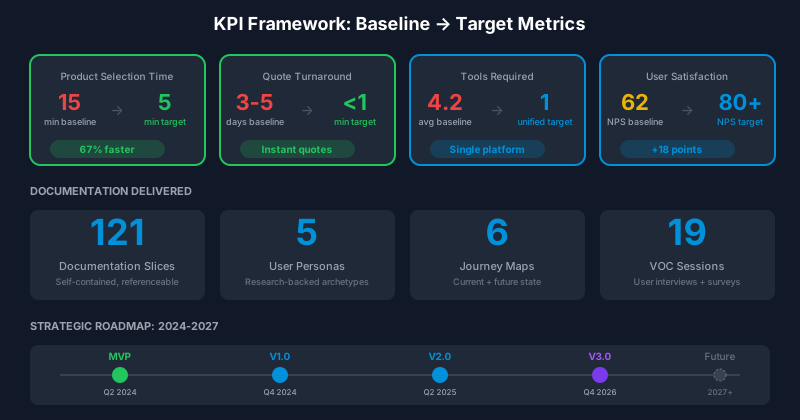
KPI framework with established baselines, targets, and strategic roadmap through 2027
Framework Transformation
Documentation Slices
Unified
single source of truth
VOC Research
Systematic
research foundation
User Personas
Defined
with journey maps
Roadmap Horizon
Strategic
multi-year vision
Key Deliverables
Target KPIs Established
| KPI | Baseline | Target | Expected Impact |
|---|---|---|---|
| Product Selection Time | 15+ minutes | <5 minutes | 67% faster task completion |
| Quote Turnaround | 3-5 days | <1 minute | Instant quote generation |
| Tools Required | 4.2 tools average | 1 unified platform | 76% reduction in context switching |
| User Satisfaction (NPS) | +62 | +80 | 18-point improvement |
Reflections