Xylem UX / Lean Process Framework
A unified 6-phase Design Thinking methodology for Xylem's enterprise design team — from methods catalog and team structure proposals to documentation standards. Establishing a scalable, consistent foundation for UX delivery across 90+ applications.
Context & Challenge
No Unified Process, No Shared Language
The Xylem UX team supported over 90 applications across multiple brands and business units. But there was no unified methodology — each designer approached projects differently, deliverables varied in format and depth, and there was no shared vocabulary for discussing UX work with stakeholders.
New designers struggled to onboard. Stakeholders didn't understand what UX could deliver or when to involve the team. Development handoffs were inconsistent. The team needed a framework that could scale across all initiatives while remaining flexible enough for different project types.
Each designer had their own approach — methods, deliverables, and timelines varied wildly across projects and team members.
New team members had no reference for "how we do UX here" — they had to learn by trial and error or absorb tacit knowledge.
Product owners and engineers didn't know what to expect from UX — when to involve us, what we'd deliver, or how long it would take.
Development teams received different formats, levels of detail, and documentation styles depending on which designer did the work.
adjustMy Brief
Design a unified UX methodology that the entire team could adopt — covering the full project lifecycle from discovery to deployment. Create supporting documentation, methods catalog, and team structure proposals. Make it visual, actionable, and adaptable to different project scales.
Key Decisions
Strategic Choices That Shaped the Methodology
| Decision | What I Chose | Why | Tradeoff |
|---|---|---|---|
| Framework base | Design Thinking adapted for enterprise SDLC | Needed a proven methodology that could integrate with existing dev processes and scale to 90+ applications | Less flexibility than pure design thinking, but much better adoption across engineering teams |
| Phase structure | 6 phases in 3 macro-stages (Understand, Explore, Materialize) | Creates natural checkpoints and allows teams to identify where they are in the process at a glance | More structured than some prefer, but essential for consistency across teams |
| Methods catalog | 20+ methods organized by phase with clear selection criteria | Teams needed guidance on which methods to use when — not just a list of possibilities | Required significant documentation effort, but dramatically reduced decision fatigue |
| Team structure | 4 specialized teams with clear swim lanes | Platform work (90+ apps) needs different skills than customer-facing design or foundation work | Risk of siloing, mitigated by shared methodology and cross-team design reviews |
The Framework
6-Phase Design Thinking Methodology
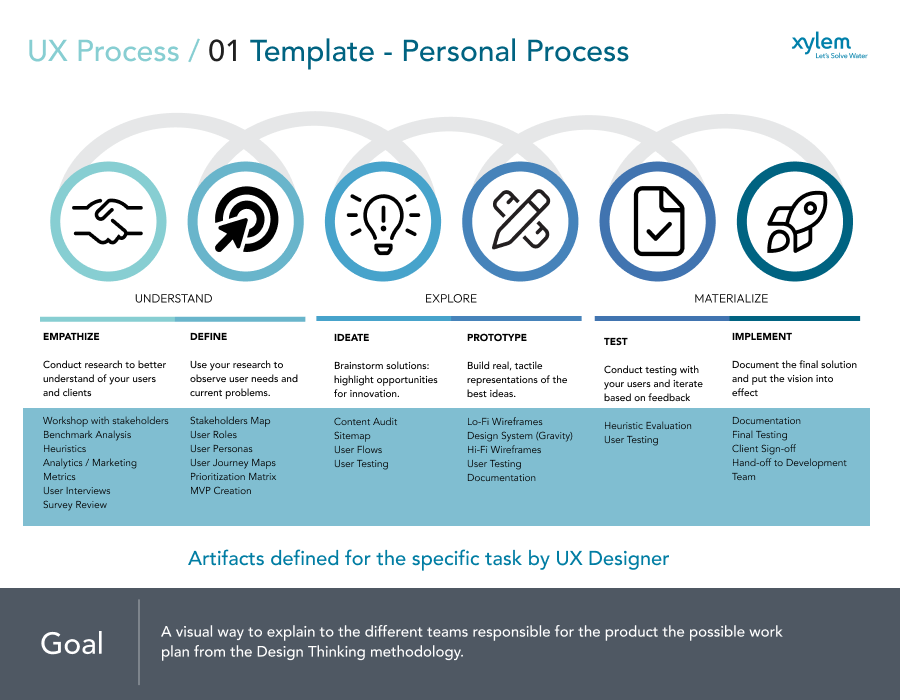
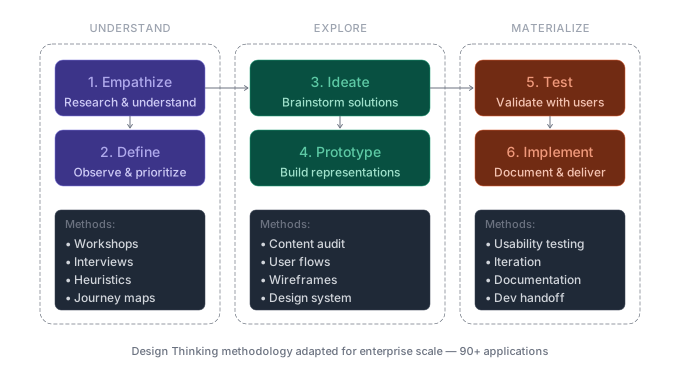
I created a comprehensive framework based on Design Thinking principles, adapted for enterprise scale and aligned with the Software Development Life Cycle (SDLC). The methodology organizes UX work into three macro-stages — Understand, Explore, and Materialize — broken into six actionable phases.
Empathize
Conduct research to understand users and clients. Workshops, benchmarking, heuristics, analytics, metrics, interviews, surveys.
Define
Observe user needs and current problems. Stakeholder maps, user roles, personas, journey maps, prioritization matrix, MVP creation.
Ideate
Brainstorm solutions and highlight innovation opportunities. Content audit, sitemap, user flows, user testing.
Prototype
Build tactile representations of best ideas. Lo-fi wireframes, design system (Gravity), hi-fi wireframes, documentation.
Test
Conduct testing with users and iterate based on feedback. Heuristic evaluation, usability testing, validation.
Implement
Document final solution and put vision into effect. Documentation, final testing, client sign-off, dev handoff.
info Goal: A visual way to explain to different teams the possible work plan from Design Thinking methodology. Artifacts are defined for specific tasks by the UX Designer.
Process Integration
How UX Joins the Development Cycle
hubThe Core Problem We Solved
UX work was happening in isolation. Designers would complete research and prototypes, then "throw them over the wall" to development — with no shared language, no agreed entry points, and no understanding of how design phases mapped to sprint cycles. This diagram was the bridge: a single visual that every stakeholder — from developers and product managers to brand owners — could immediately understand.
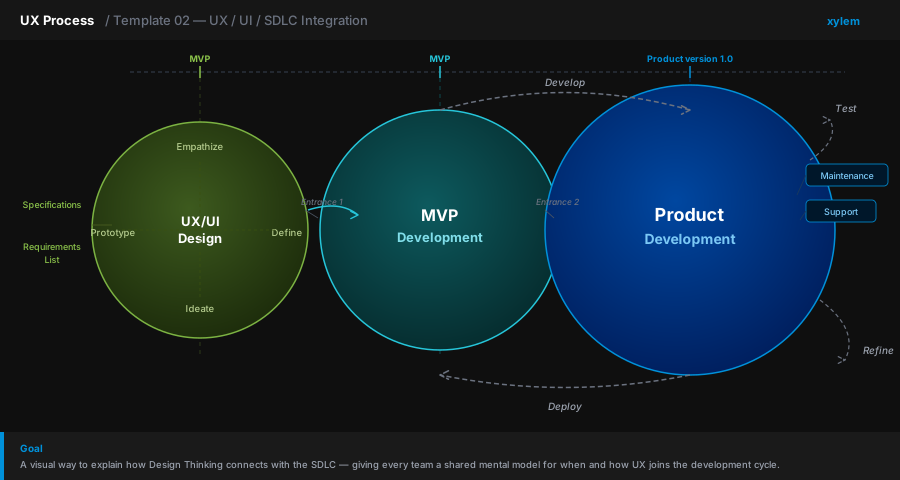
Template 02 — UX / UI / SDLC Integration. Internal Xylem UX Process documentation.
The Design Thinking loop — Empathize, Define, Ideate, Prototype — runs continuously. It feeds into the development cycle through two defined entry points, not as a one-time handoff.
The first delivery milestone. UX enters here with validated concepts and specifications, then co-develops with engineering through Develop → Deploy cycles. A second entrance point allows UX to re-enter mid-cycle.
Full release at version 1.0. The Develop → Test → Deploy → Refine loop is continuous — UX stays in the cycle for maintenance and iterative improvement, not just initial launch.
lightbulbWhy This Changed Everything
Before: UX was a black box. Stakeholders didn't know when to involve the team, and developers received designs with no context for why decisions were made.
After: Every team member could point to where they were in the diagram. Product managers knew when to request UX input. Developers understood what deliverables to expect at each phase boundary.
info This template was presented to PMs, tech leads, and brand owners as the canonical explanation of how UX integrates with Agile sprints and the broader SDLC. It became a living reference shared across teams in Confluence.
Methods Catalog
Standardized UX Methods & Activities
Beyond the framework, I created a visual catalog of UX methods — each documented with purpose, process, and expected outputs. This serves as a reference for the team and an educational tool for stakeholders.
psychology Phase 1: Empathize
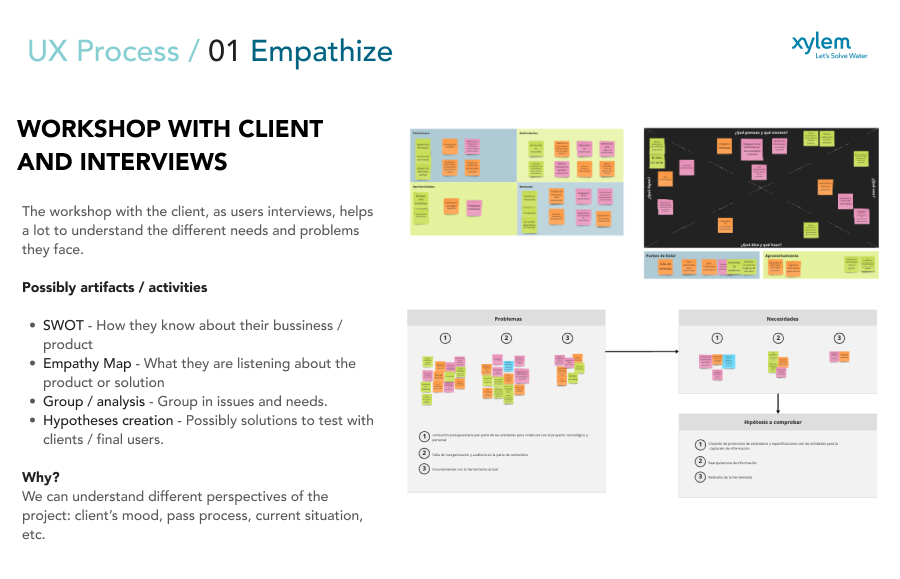
Workshops with stakeholders: SWOT analysis, Empathy Maps, hypothesis creation
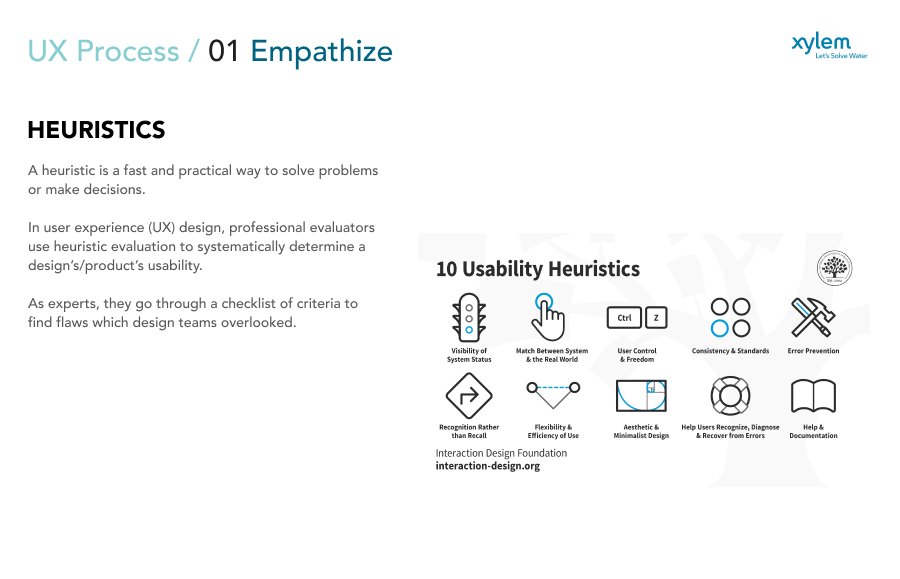
Heuristic evaluation: 10 usability principles for systematic design review
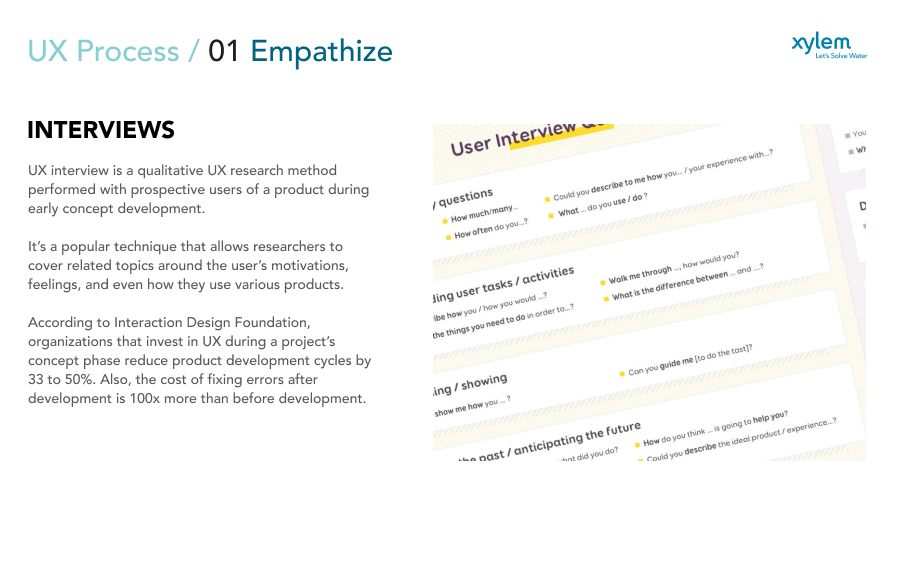
User interviews: Questions about tasks, activities, showing/anticipating the future
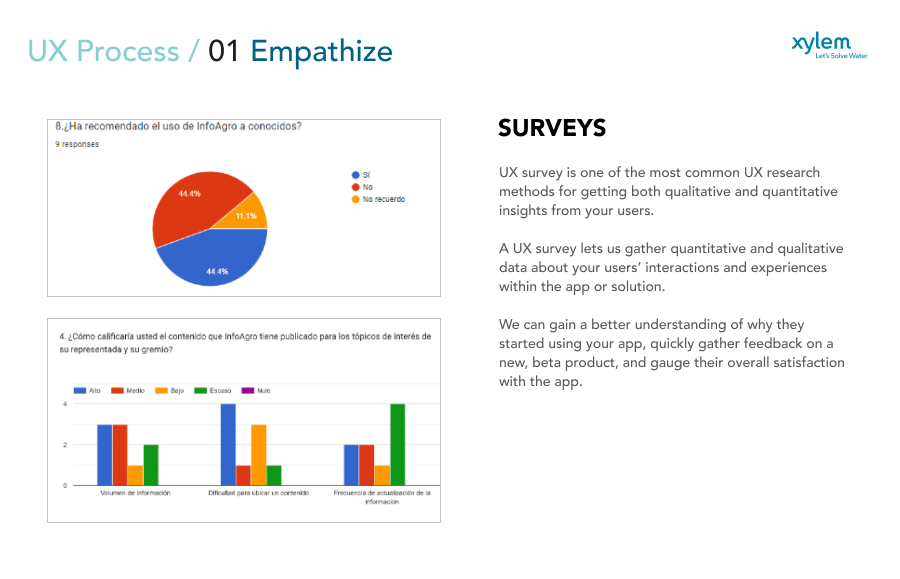
Surveys: Quantitative data collection at scale to validate qualitative findings
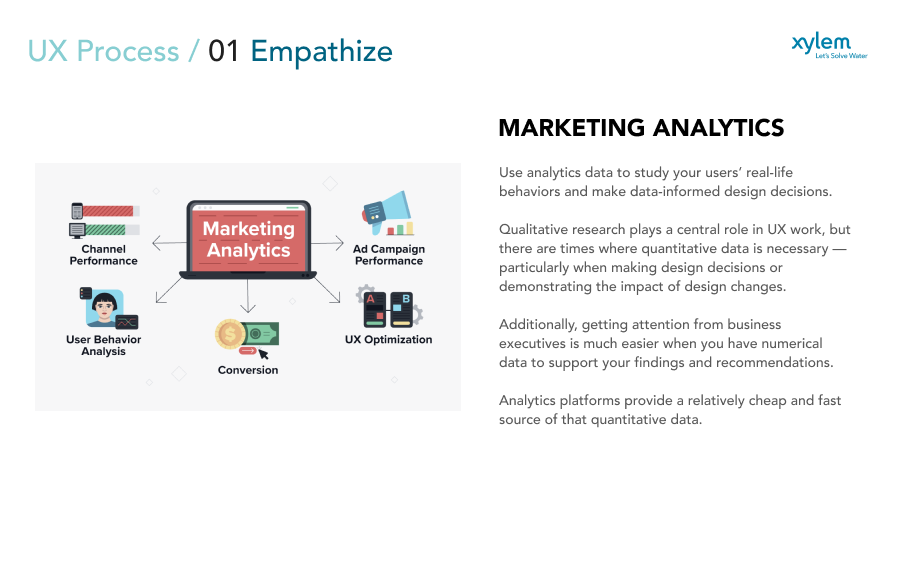
Analytics: Behavioral data, usage metrics, and heatmaps to inform research hypotheses
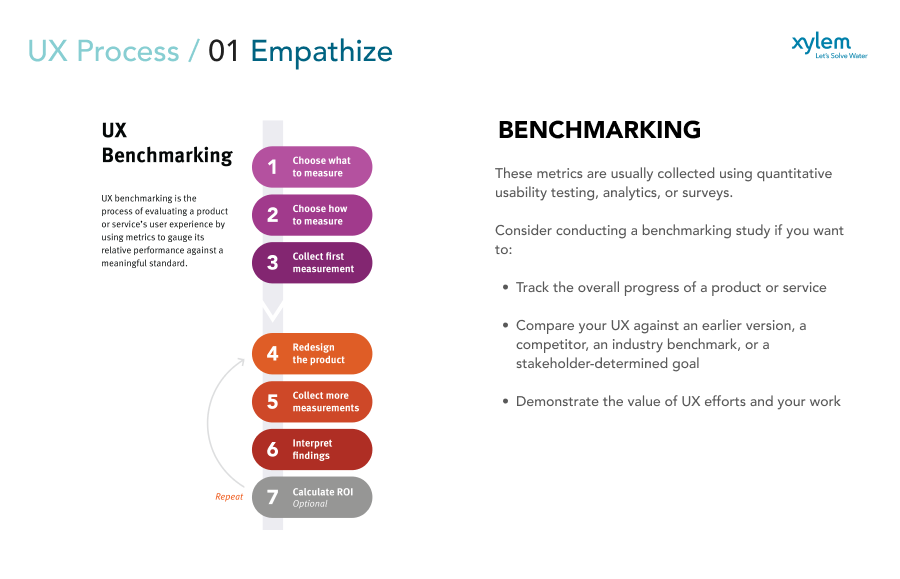
Benchmarking: Track progress, compare against competitors, demonstrate UX value
target Phase 2: Define
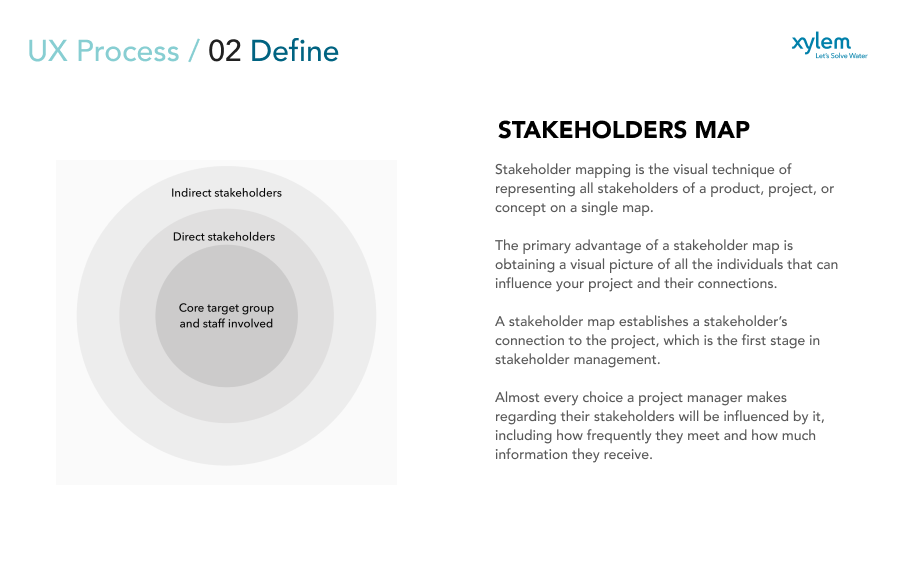
Stakeholder mapping: Visual representation of all project stakeholders and connections
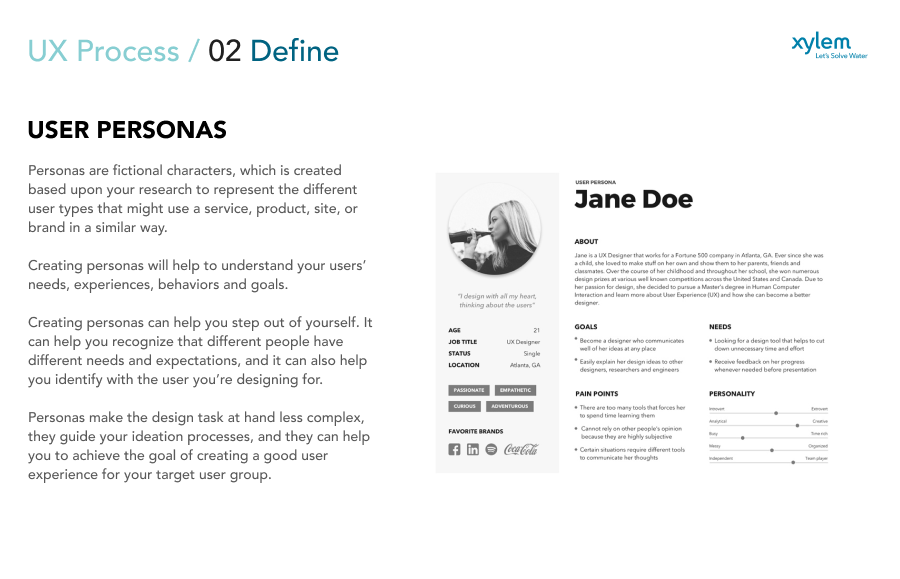
User personas: Fictional characters representing different user types
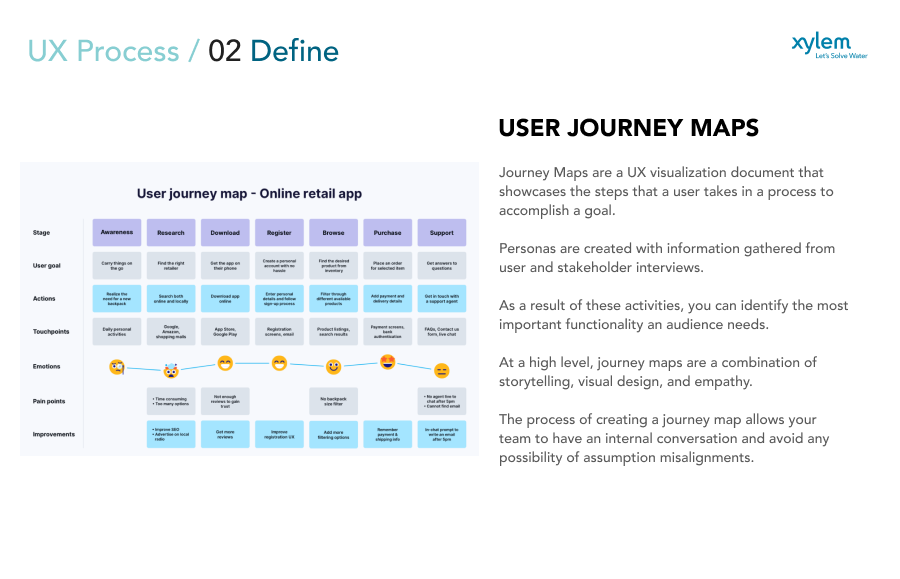
Journey maps: Visualization of user steps, emotions, and pain points
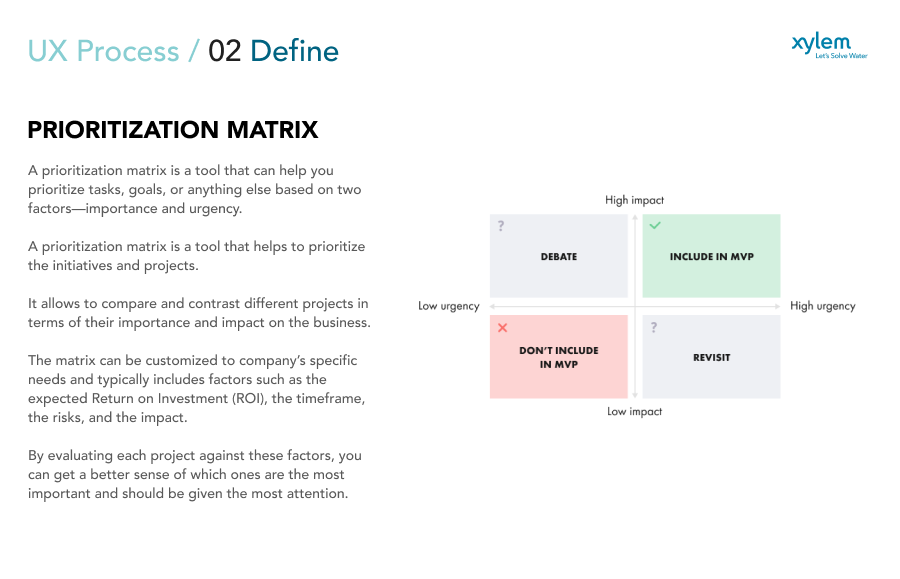
Prioritization matrix: Balancing importance, urgency, ROI, and risk
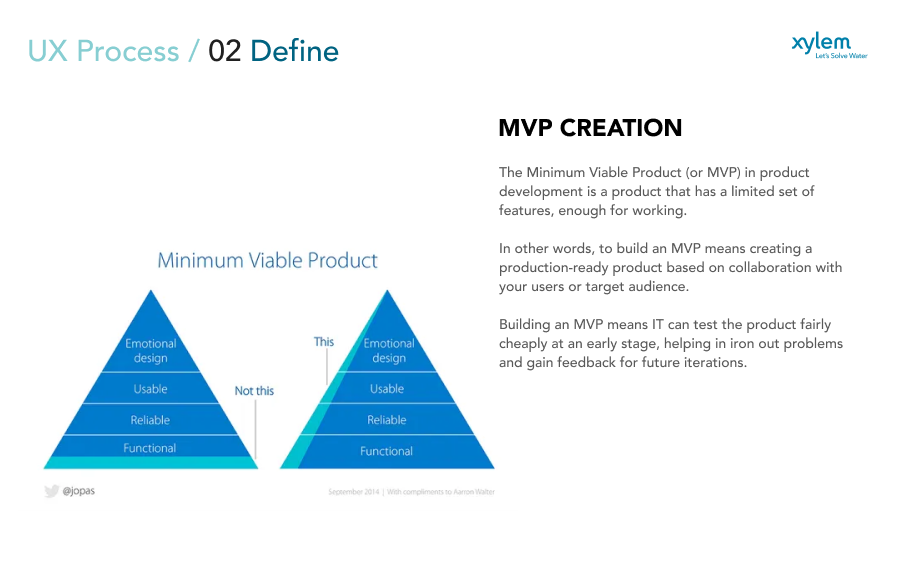
MVP definition: Scoping minimum viable product with clear criteria for what goes in and what waits
lightbulb Phase 3: Ideate
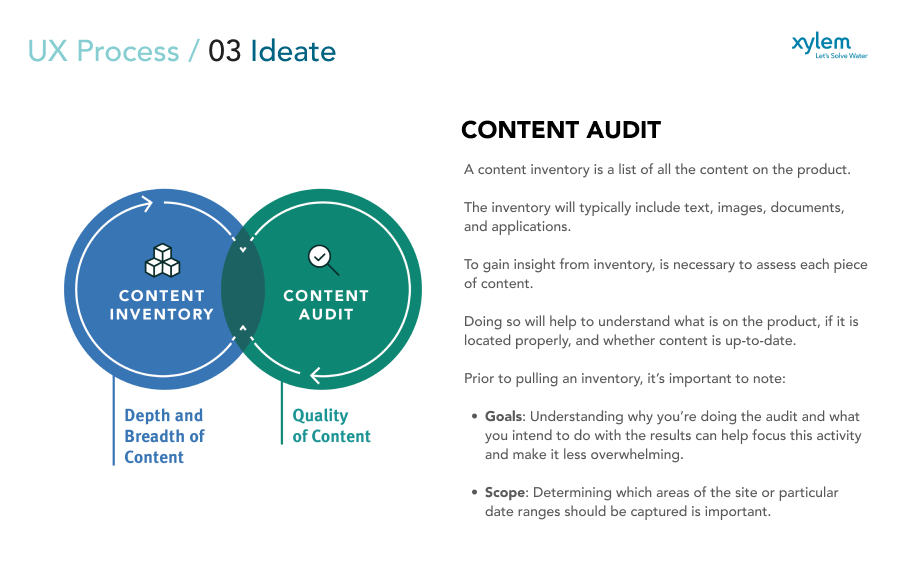
Content audit: Inventory of all content, location assessment, freshness check
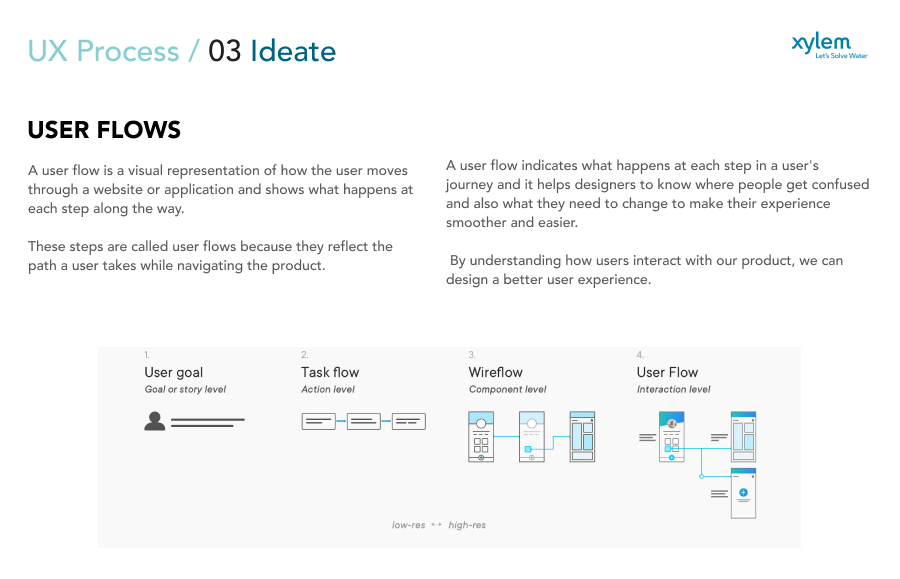
User flows: Visual representation of how users navigate through the product
brush Phase 4: Prototype
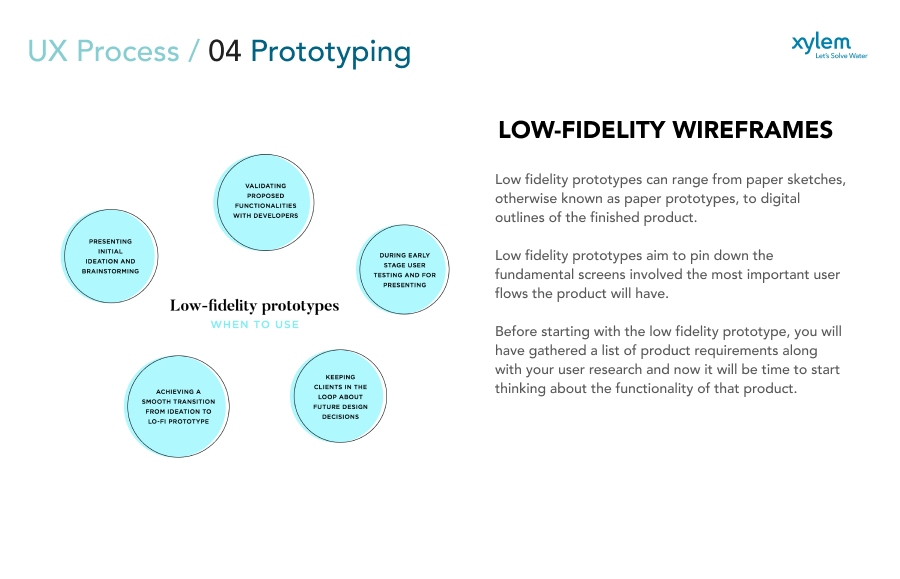
Lo-fi wireframes: Paper sketches and digital outlines for fundamental screens
Design system: Standards for design at scale with reusable components
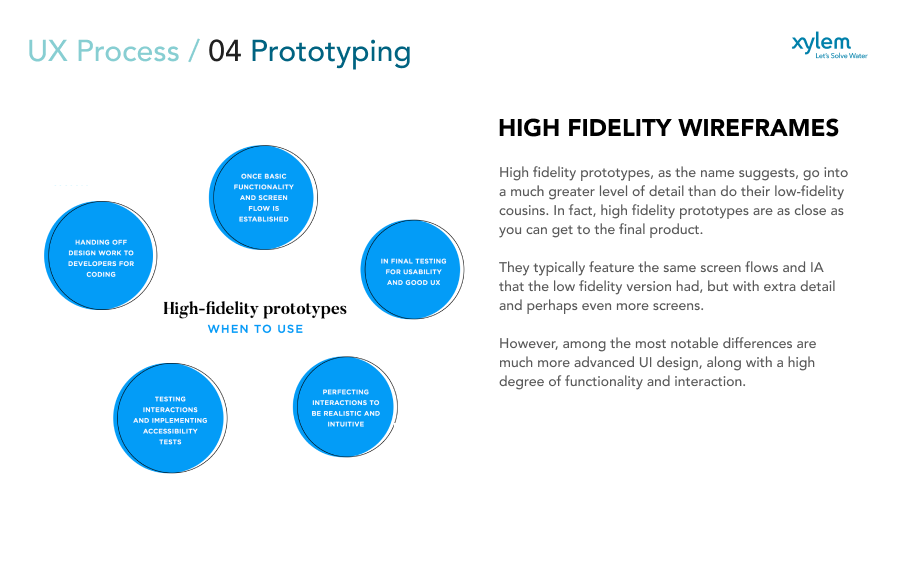
Hi-fi wireframes: Detailed, production-ready designs with full UI and interactions
science Phase 5: Test
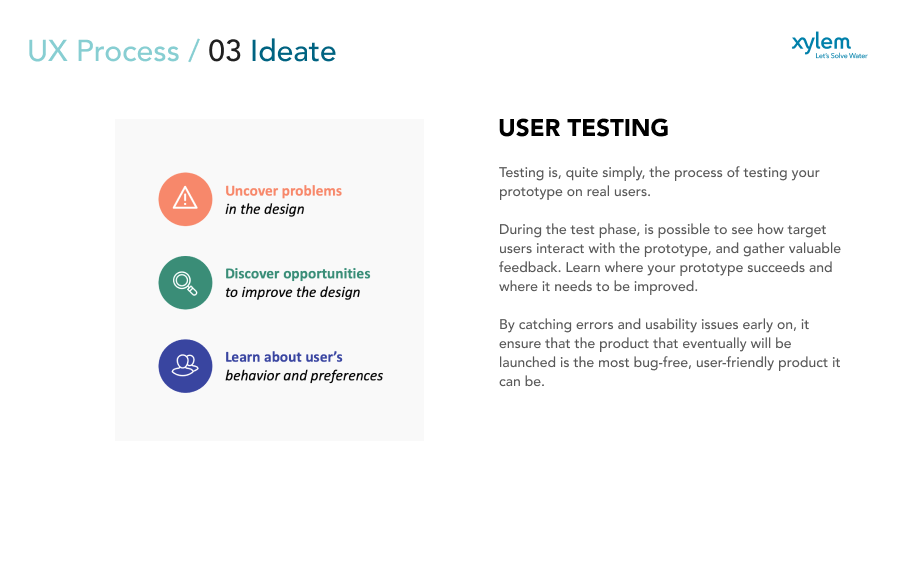
Usability testing: Moderated and unmoderated sessions to validate designs, identify friction points, and iterate before handoff
Documentation Standards
Confluence, JIRA, and Timeline Integration
A methodology is only useful if it's documented and accessible. I established standards for tracking UX work across the organization's existing tools — Confluence for documentation and JIRA for task management.
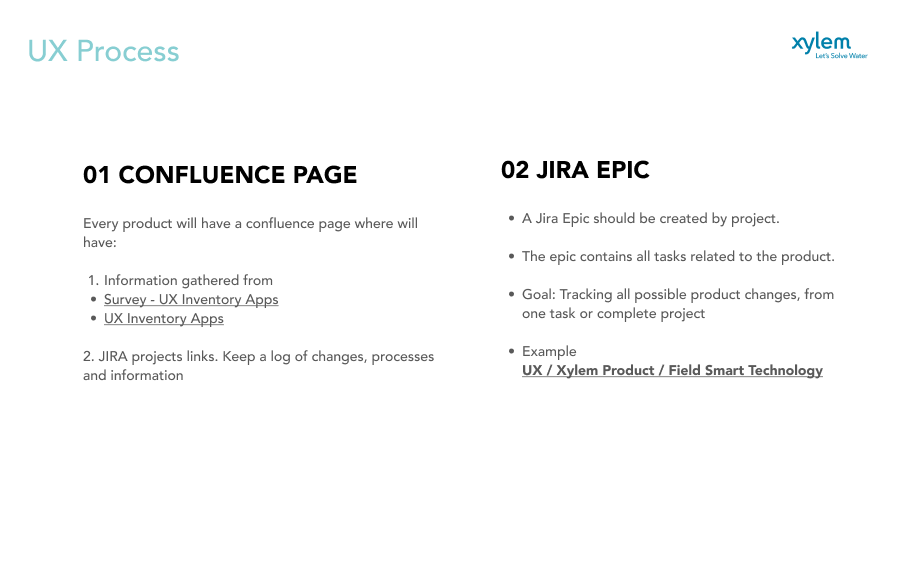
Every product has a Confluence page with gathered information from surveys, UX inventory, and JIRA project links. Single source of truth.
A JIRA Epic is created for each project containing all related tasks. Enables tracking of all product changes from single task to complete project.
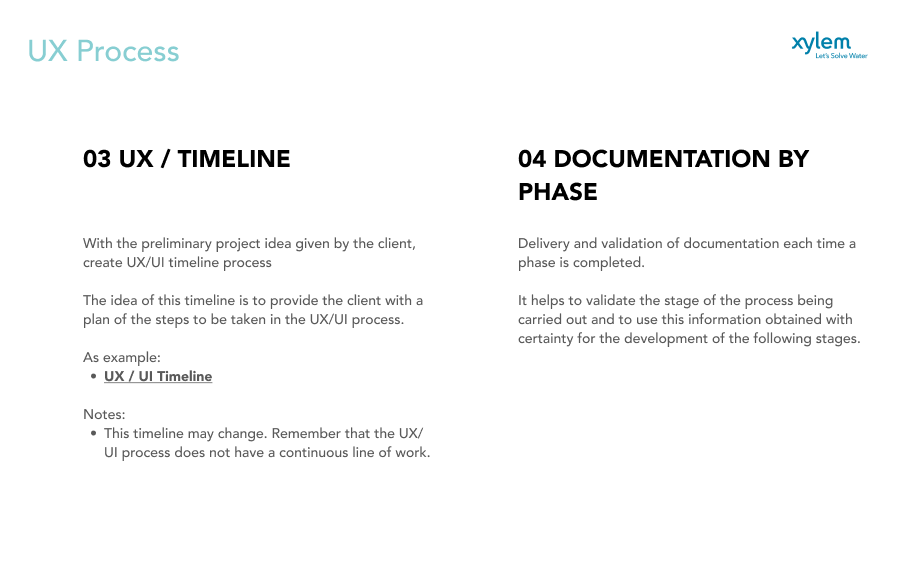
Project timeline showing UX/UI process steps. Provides clients with a plan of work — may change as UX process isn't always linear.
Documentation delivered and validated after each phase completion. Helps validate process stage and use information for following phases.
Team Structure
Specialized Teams for Scalable UX
Beyond process, I proposed a team structure organized by specialization — enabling designers to develop deep expertise while maintaining collaboration across projects.
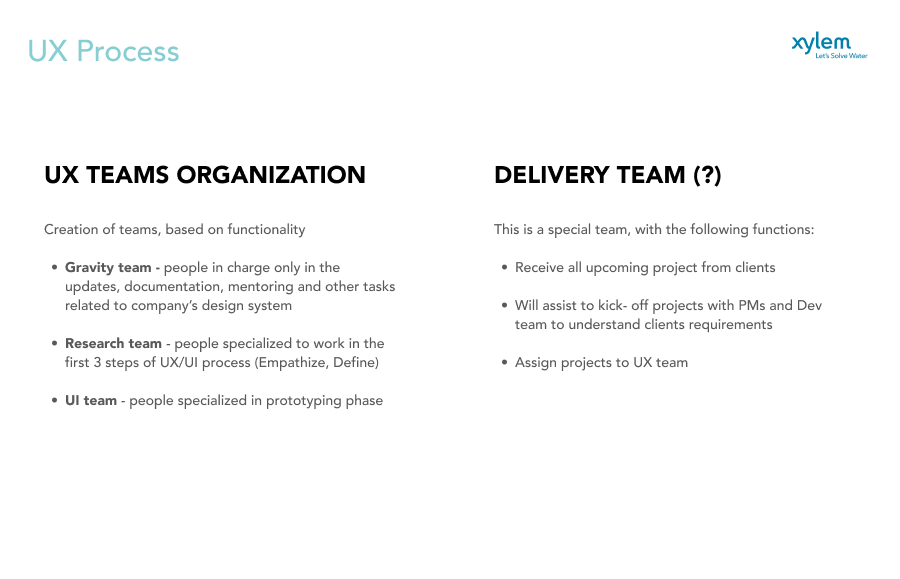
Gravity Team
Responsible for design system updates, documentation, mentoring, and other tasks related to the company's design system. Ensures consistency across all products.
Research Team
Specialists in the first 3 steps of UX process — Empathize and Define. Conduct user research, create personas, map journeys, and identify opportunities.
UI Team
Specialized in the Prototype phase. Create wireframes, high-fidelity designs, and production-ready assets aligned with the design system.
Delivery Team
Receives incoming projects, attends kick-offs with PMs and Dev, understands requirements, and assigns projects to appropriate UX teams.
info These proposals are based on research of UX/UI processes and active communication with the team through standup meetings and activities related to development of Xylem products.
Results & Impact
A Foundation for Scalable UX
Framework Phases
Structured
Design Thinking methodology
UX Methods
Cataloged
with visual cards
Team Structure
Specialized
Gravity, Research, UI, Delivery
Applications Covered
Unified
single methodology
Key Deliverables
Reflections