BESS System
Designing an intuitive Battery Energy Storage System interface through a full Design Thinking process — from stakeholder workshops and user research to MVP prototyping and customer experience strategy for the Latin American residential sector.
Context & Challenge
Outdated Systems, Untapped Market
Energy storage management in Latin America was inefficient — existing solutions were outdated, complicated, and not user-friendly. This caused operational issues and higher costs, making it hard for homeowners to effectively manage their energy resources.
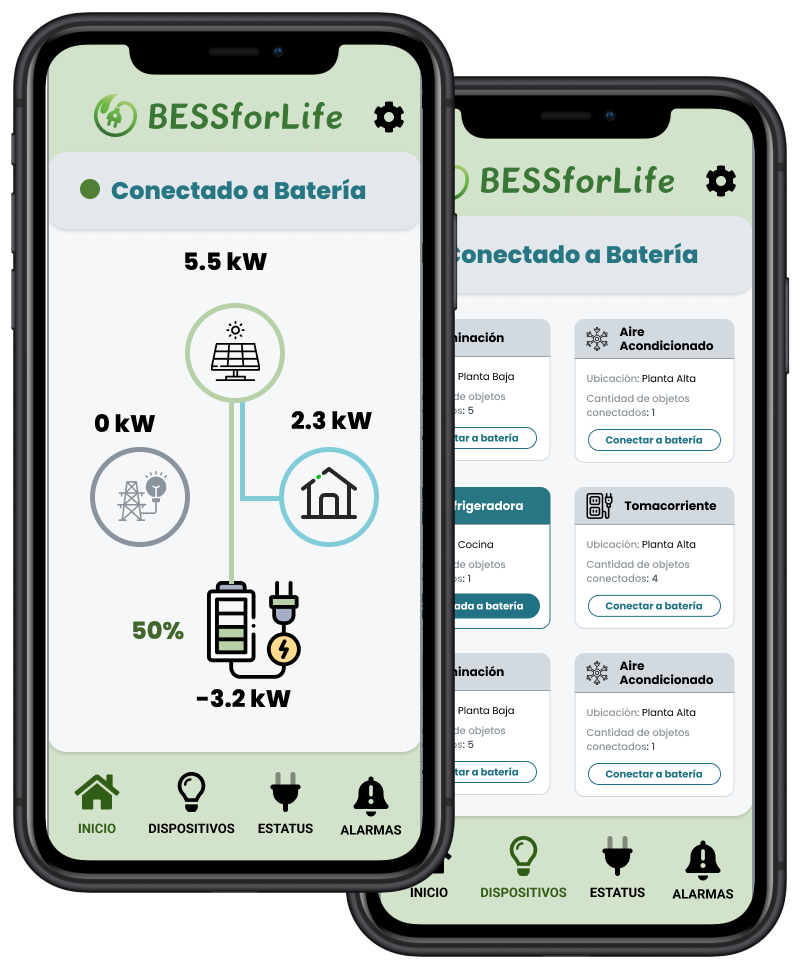
The challenge was to design and develop an intuitive, robust, and scalable BESS that integrates with existing electrical grids, manages renewable energy variability, and promotes user adoption through effective education and user-friendly interfaces.
The target market held misconceptions about BESS systems due to lack of information — myths and confusion hindered adoption of the technology.
Each country has distinct legal challenges in managing this type of energy — requiring careful regulatory research before product design.
Existing systems had no intuitive management interface for homeowners — requiring technical expertise that most residential users lacked.
Most BESS resources were in English — the Latin American market needed educational content and interfaces in Spanish.
adjustMy Brief
Lead the full Design Thinking process to create a BESS product and ecosystem — from discovery workshops through MVP definition, UI prototyping, and customer experience strategy. Target the residential sector in Latin America with a focus on education and user adoption.
Discovery
Understanding the Market and Users
The discovery phase combined business analysis with field research — stakeholder workshops defined the strategic direction while surveys and expert interviews validated assumptions with real users.
Research Snapshot
Stakeholder Workshop
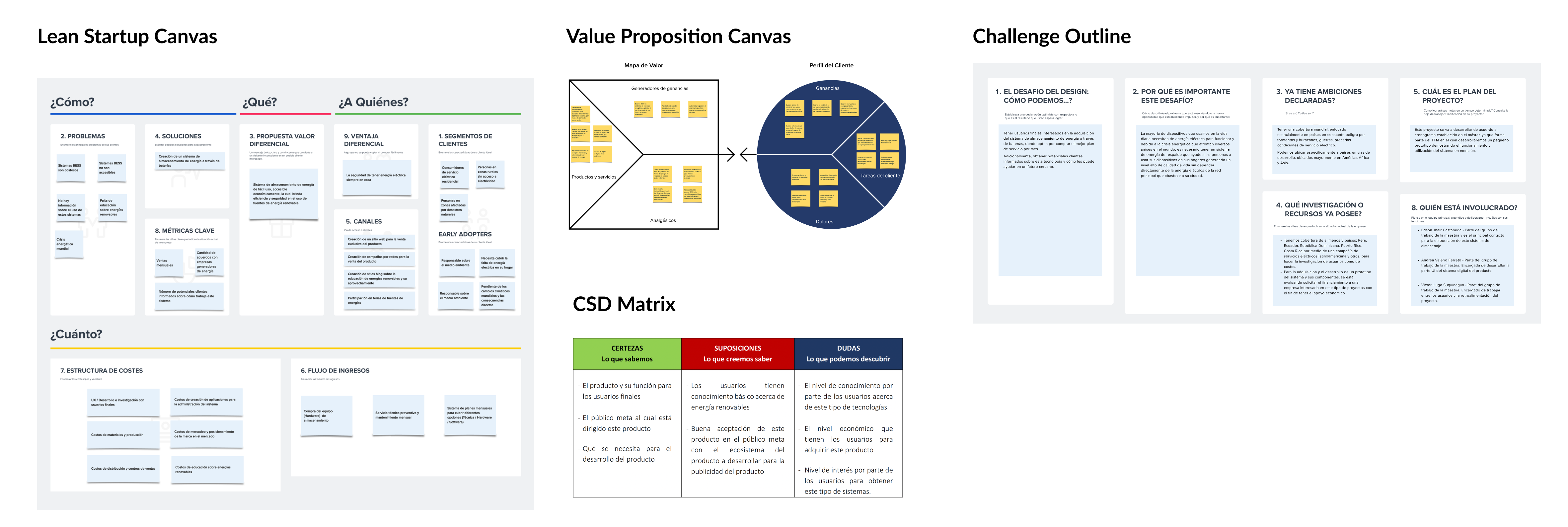
CSD Matrix, Lean Startup Canvas, Value Proposition Canvas
Defined target market: residential sector, homes and developments, especially rural areas and regions vulnerable to natural disasters.
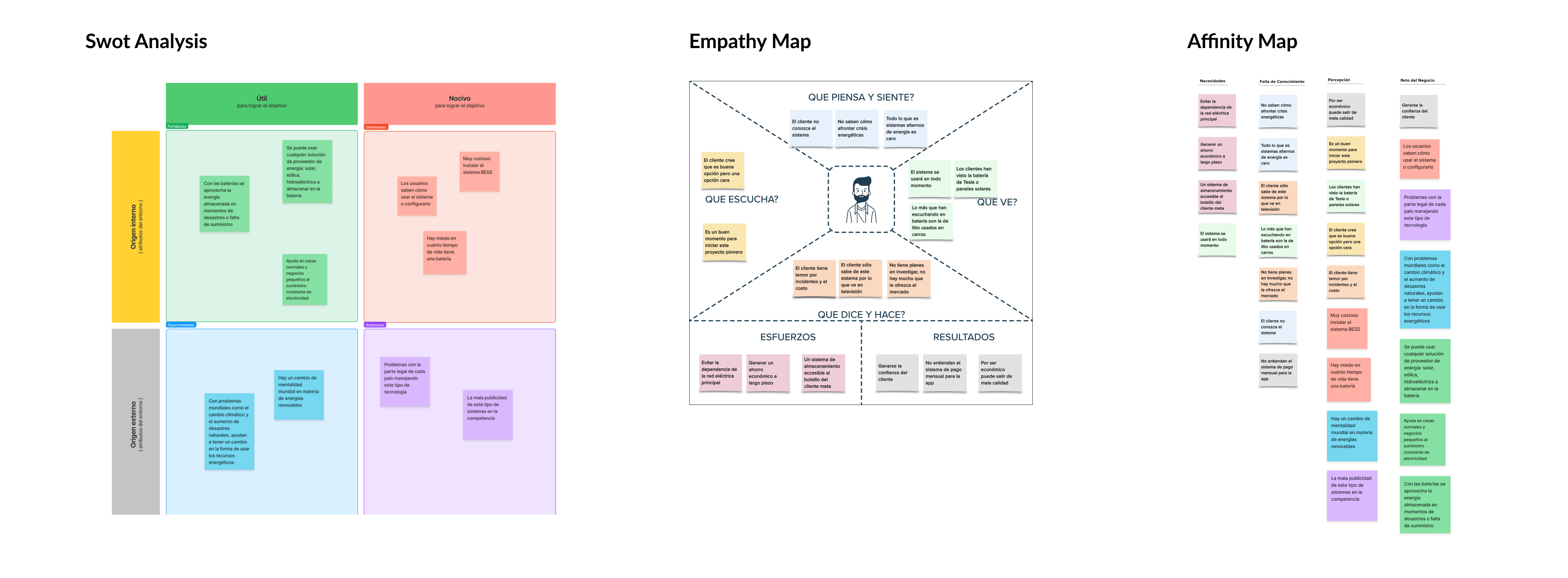
SWOT & Empathy Mapping
Market analysis + user understanding
Target market relies on myths and misconceptions about energy storage — education is as critical as the product itself.
User Surveys
Comprehensive survey on BESS perception
Gathered data on knowledge levels, willingness to adopt, and price sensitivity — informing both product and marketing strategy.
Expert Interviews
Energy sector professionals
Obtained precise technical details about integration challenges, maintenance needs, and regulatory landscape across Latin American markets.
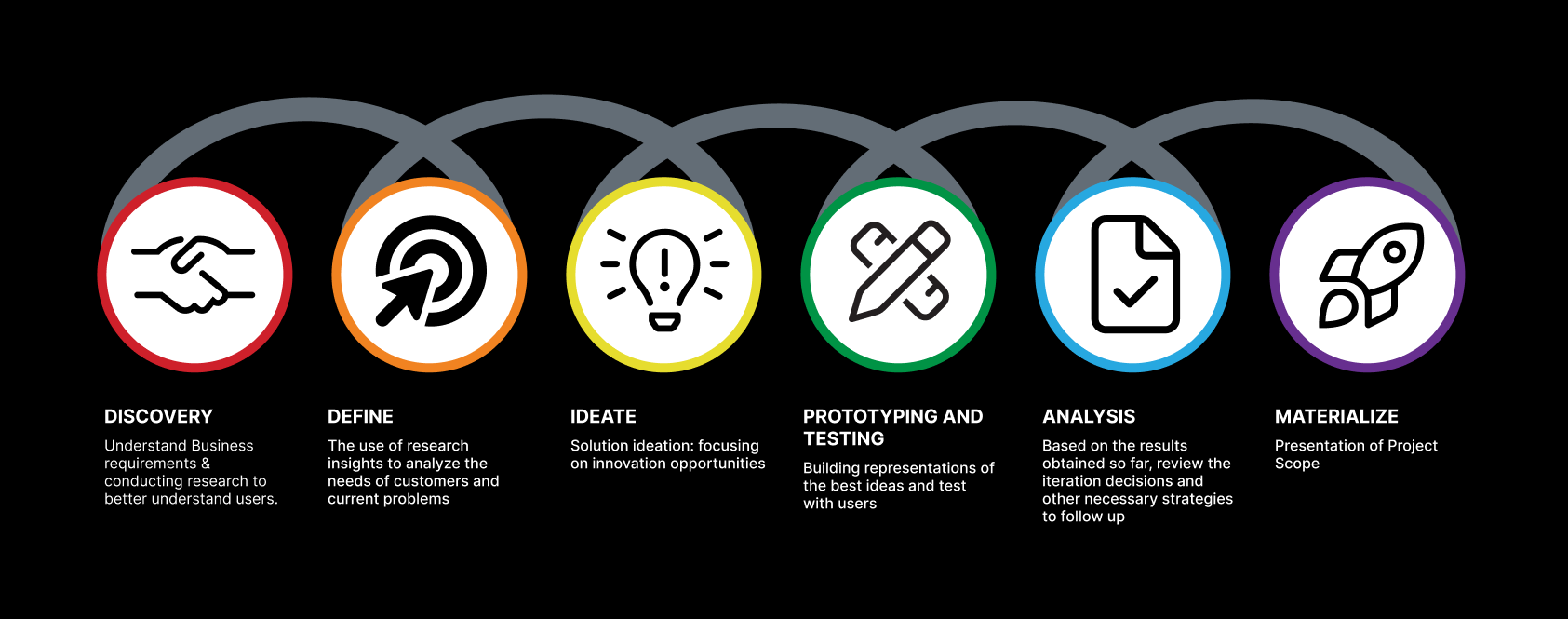
Design Thinking process map — from Discovery through CX Strategy
Goals and metrics definition from stakeholder workshop
Business requirements — CSD Matrix, Lean Canvas, Value Proposition
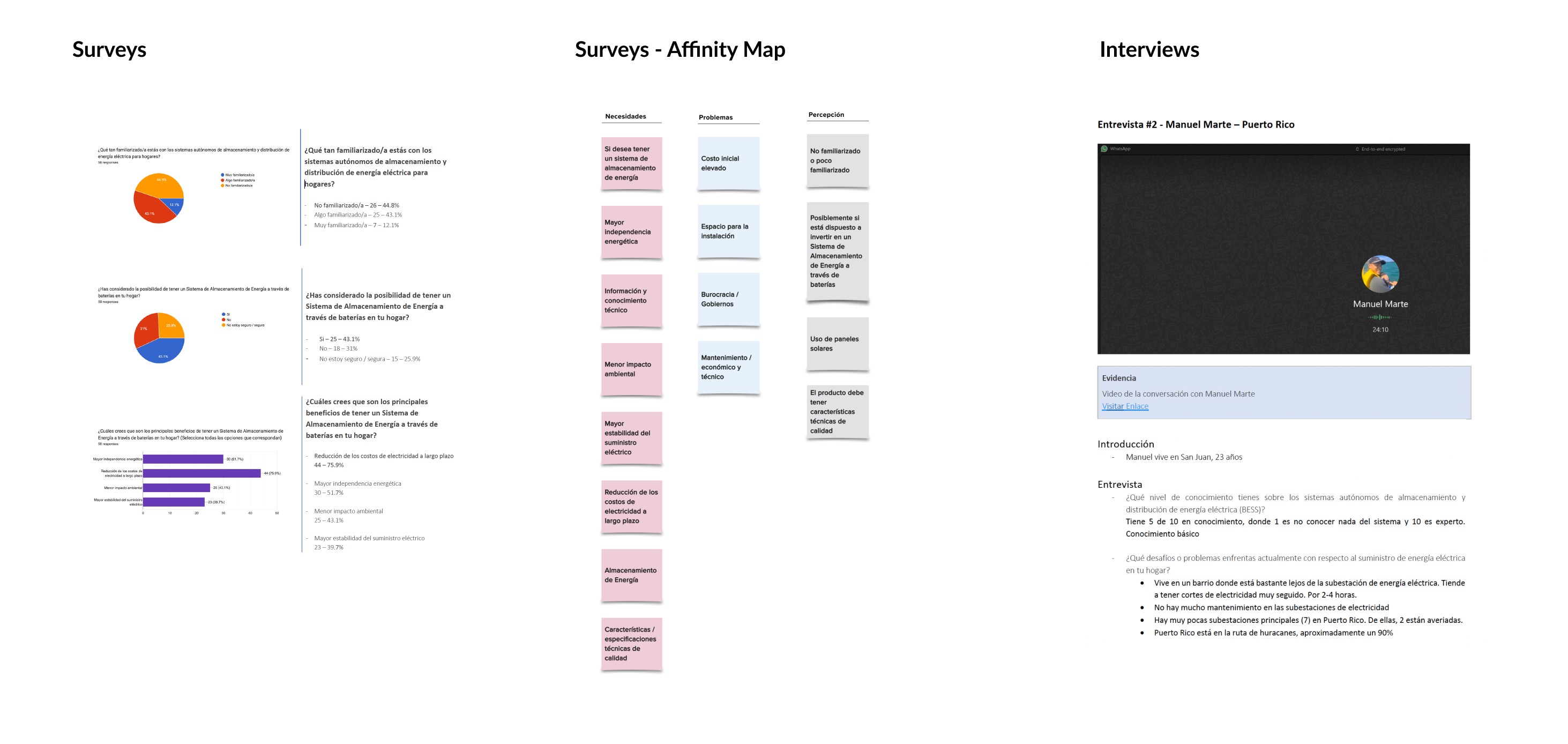
User research — surveys, affinity mapping, and expert interviews
Define
Synthesizing Research into Direction
Research findings were synthesized into user archetypes, personas, customer journeys, and a prioritized requirements matrix — creating a clear path from insight to design.
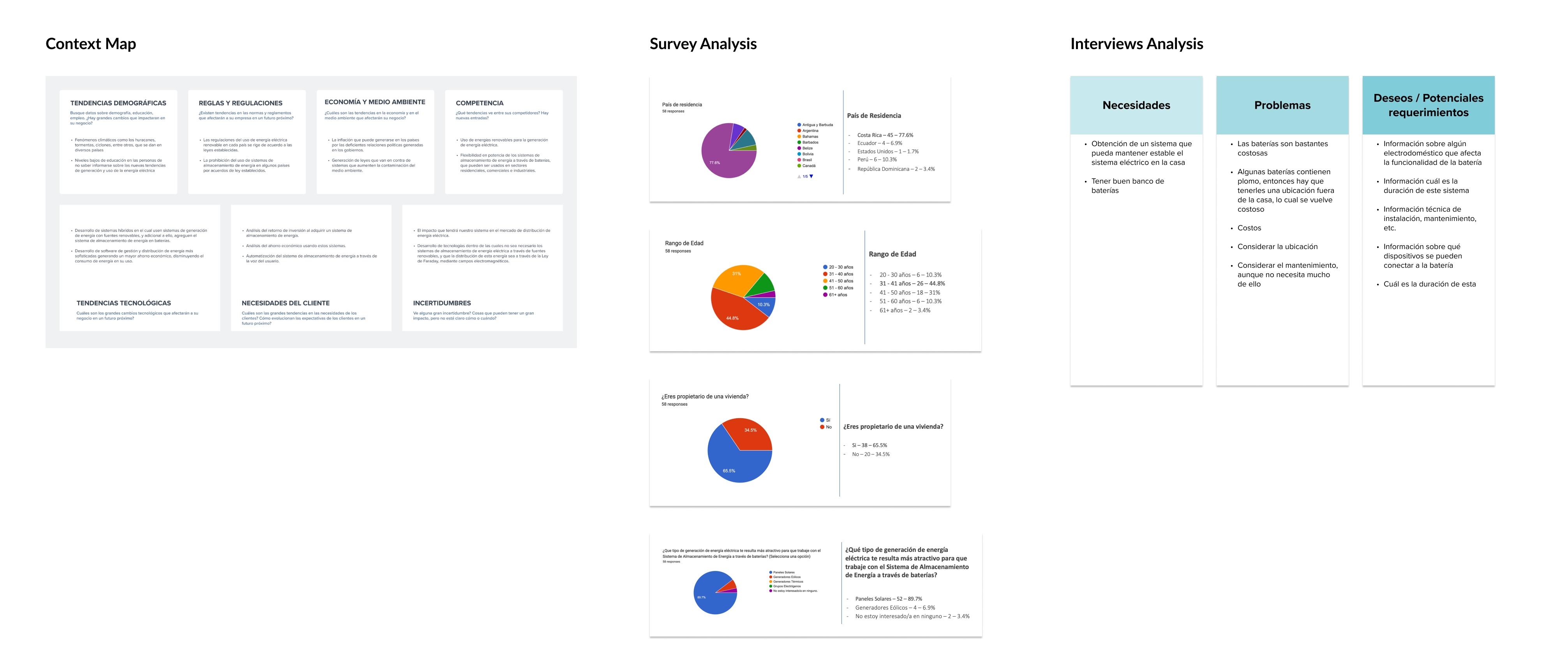
Context map and survey/interview analysis
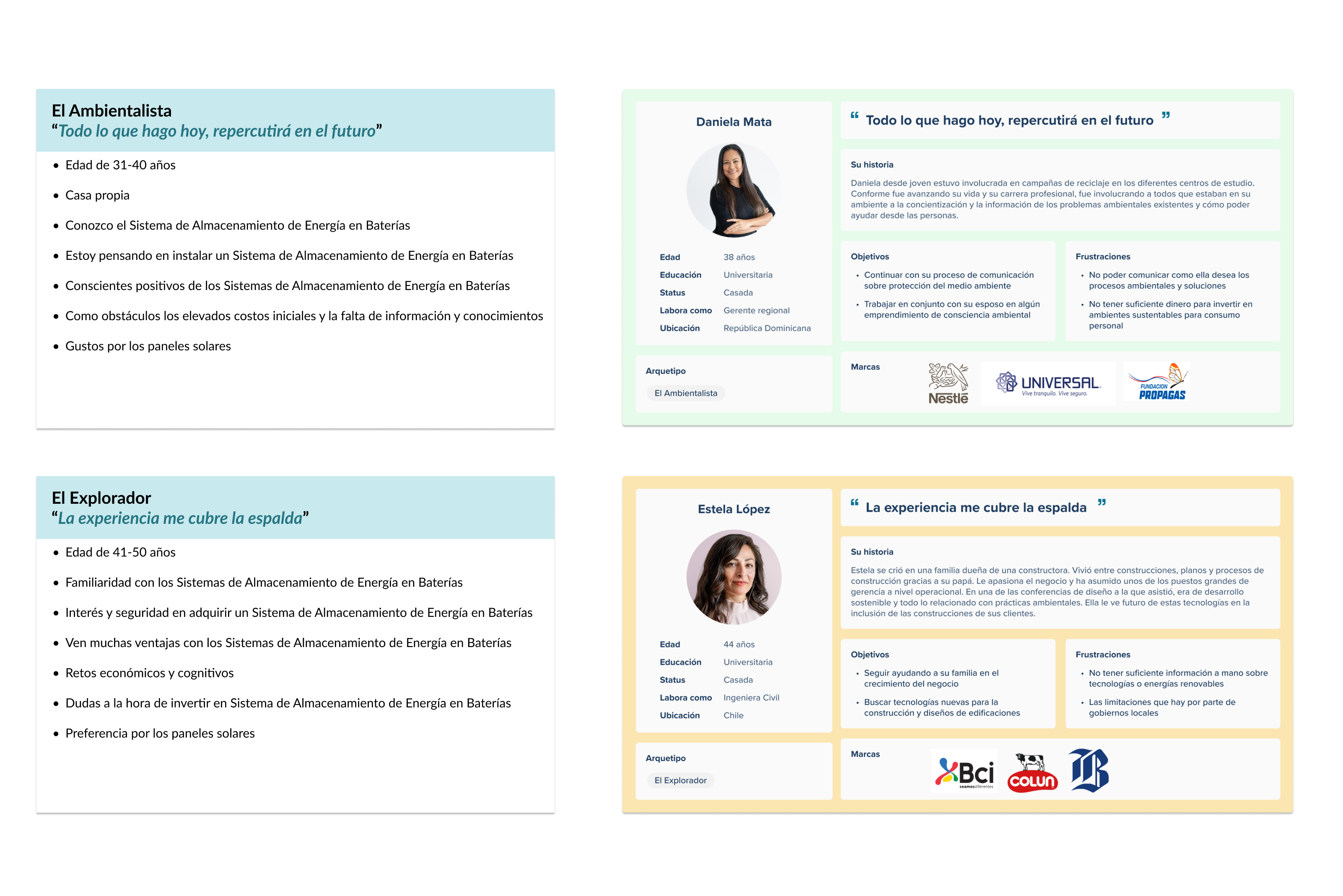
User archetypes and personas — The Environmentalist and The Explorer
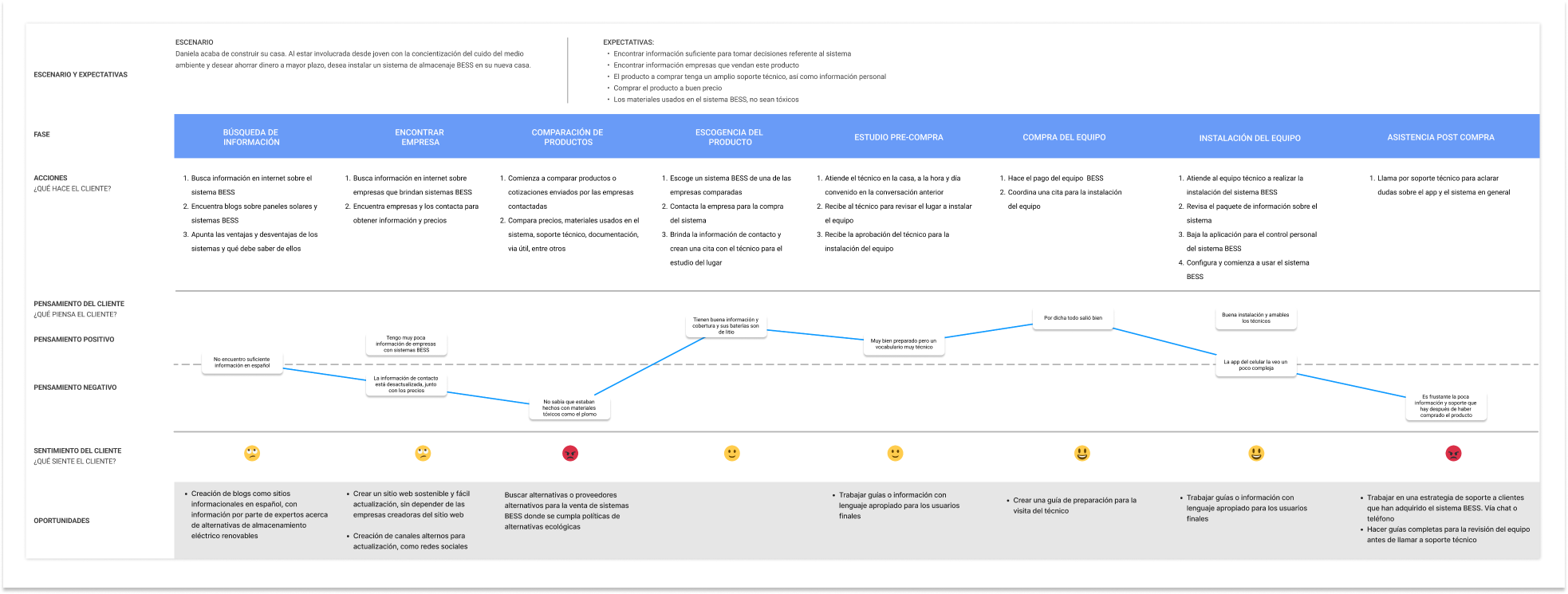
Customer journey map — identifying opportunities for the MVP
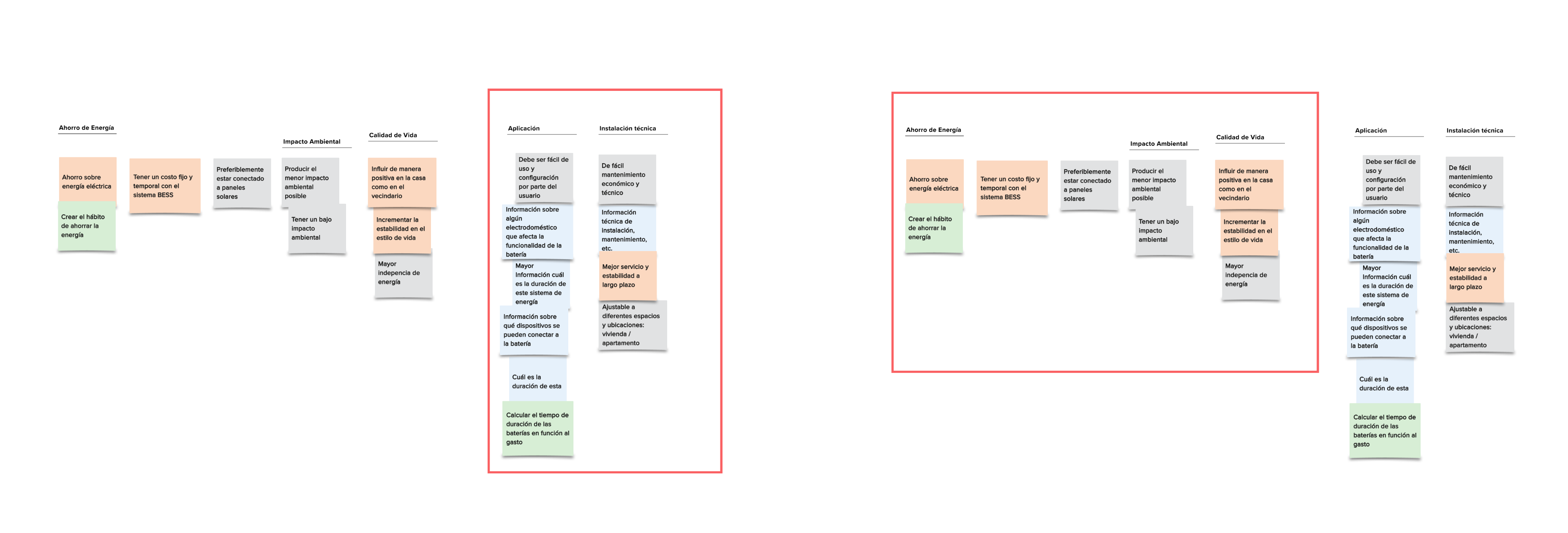
Clustering exercise — synthesizing inputs for ideation and requirements
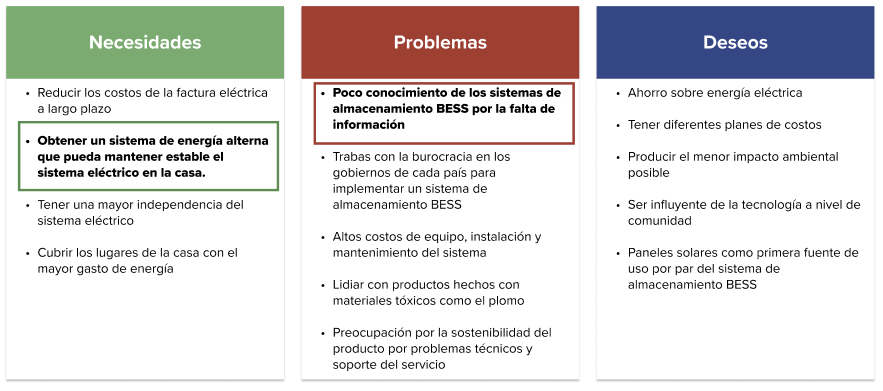
NPD Matrix (Needs, Problems, Desires) and Point of View statement
How Might We?
"How might we create alternative sources of information about BESS systems that make it easier to find information and also allow users to find and purchase our product?"
Ideate & Prototype
From Brainstorming to MVP
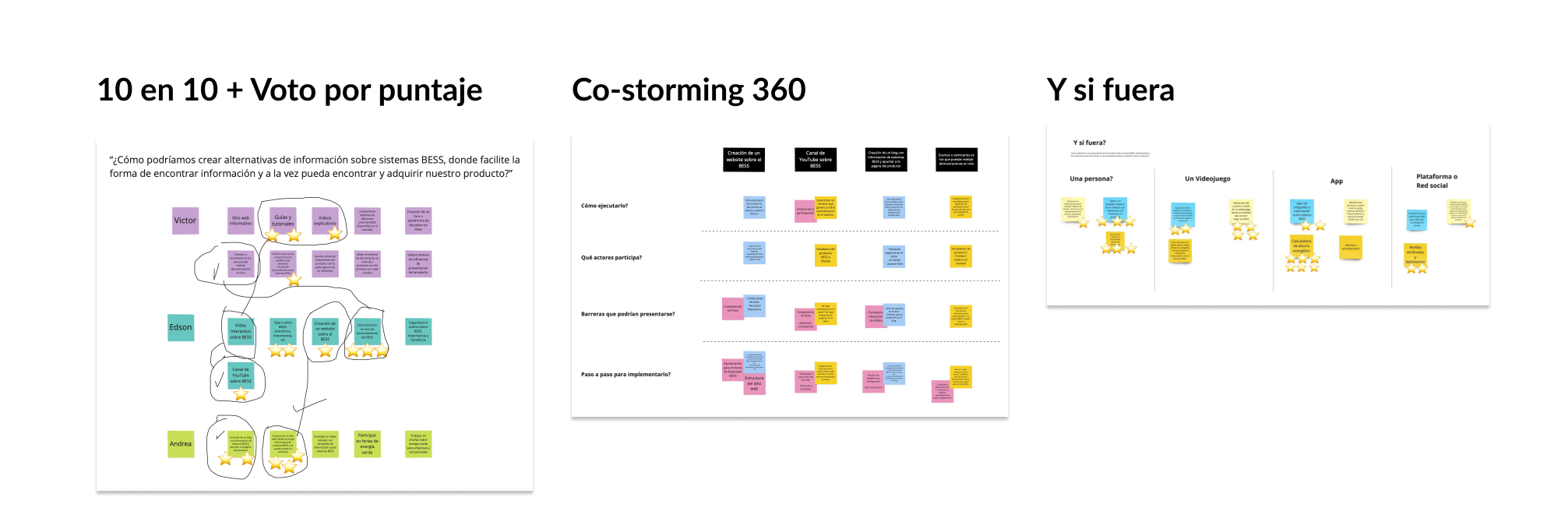
Brainstorming — 10 in 10, Co-Storming 360, and What If exercises
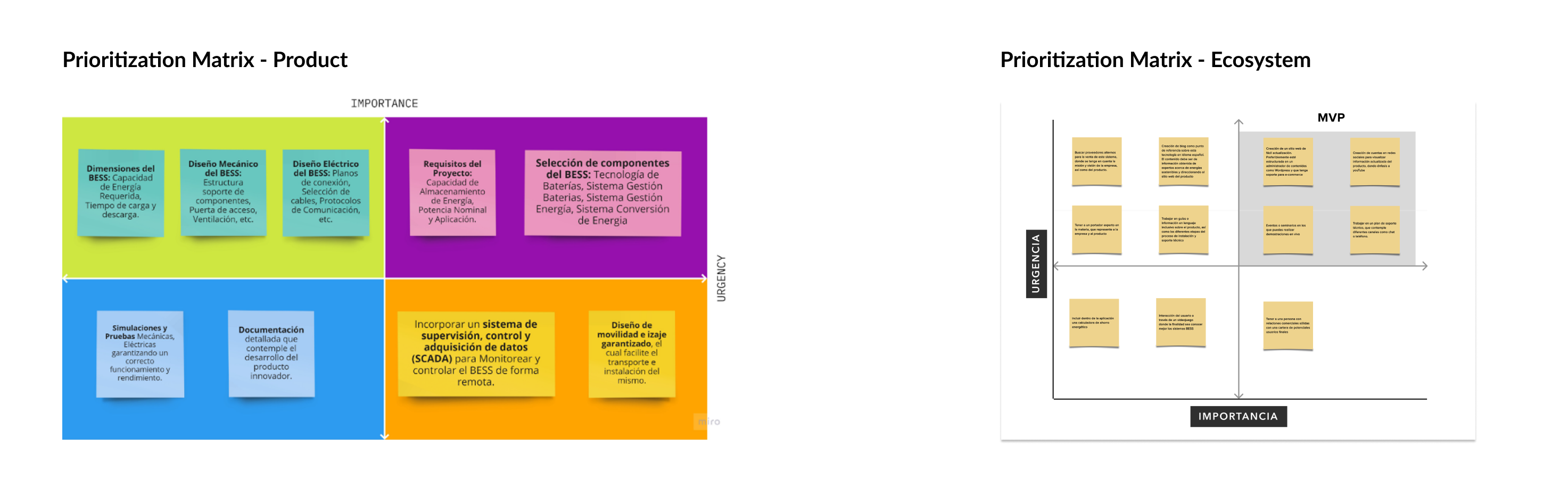
Prioritization matrices — Product MVP and Ecosystem MVP
Prototyping
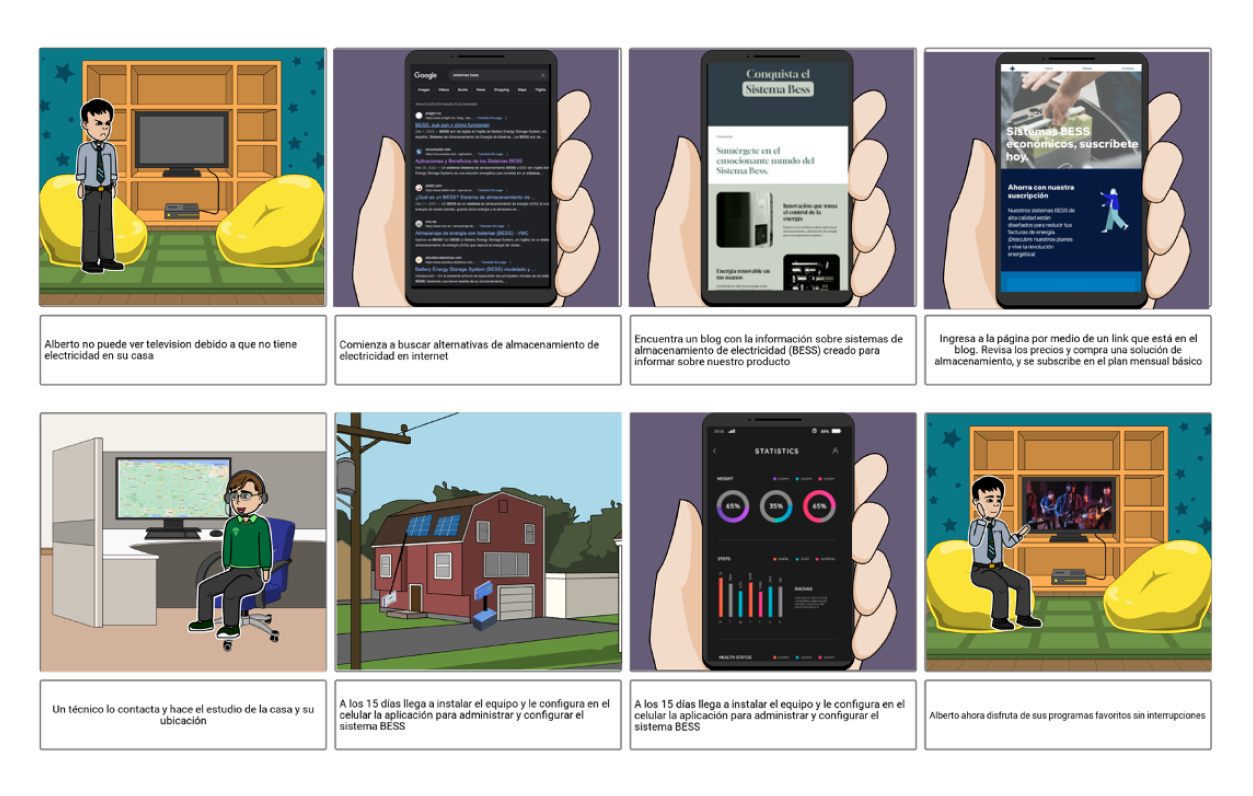
Storyboard covering all prototypes: Blog, Website, BESS Product, and Mobile App
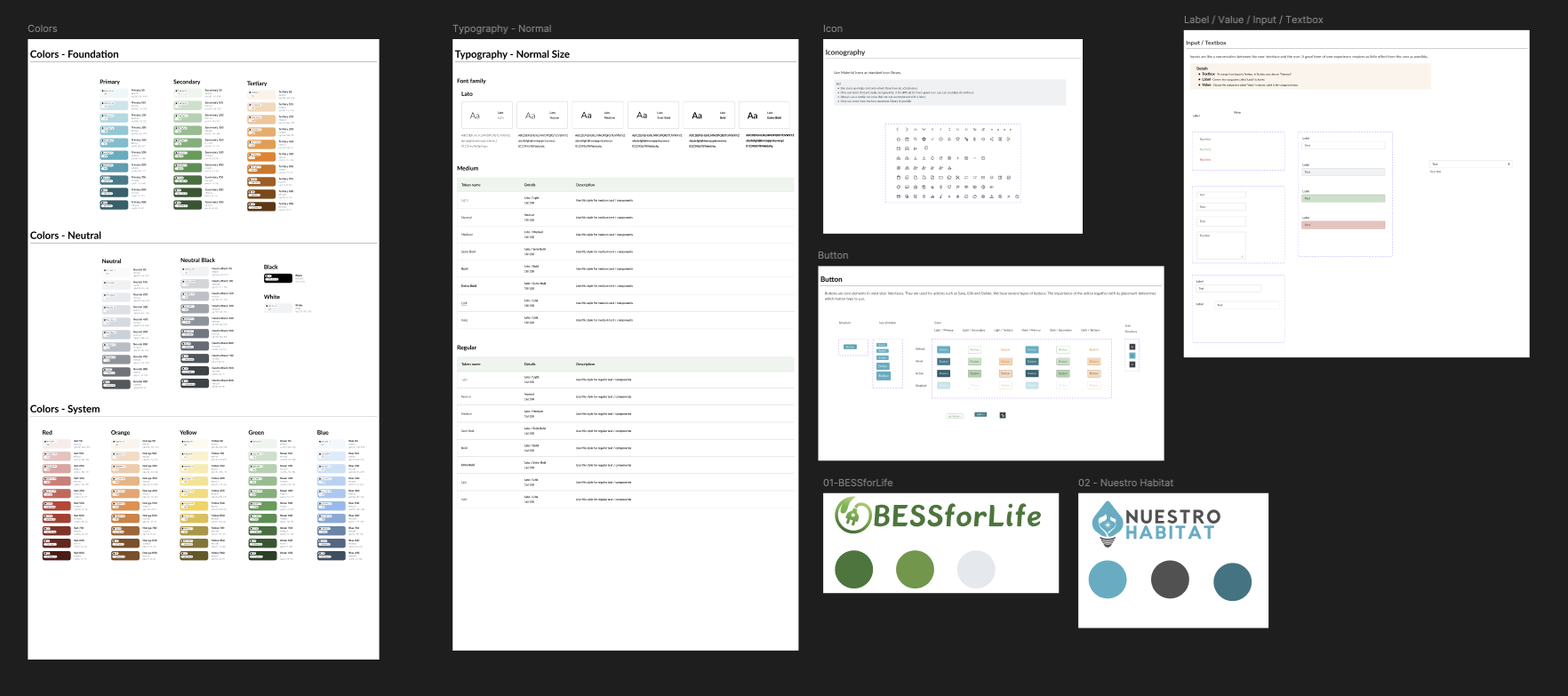
Global style guide and pattern library
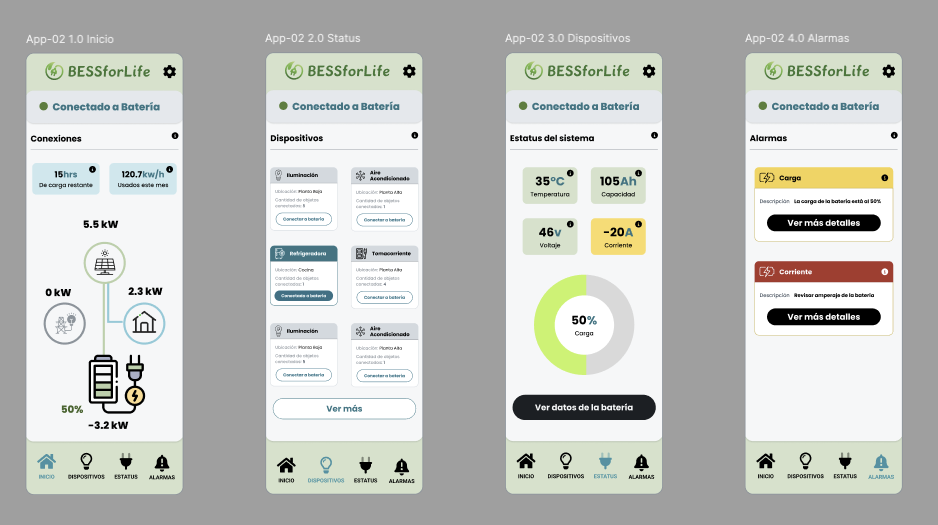
Mobile application — high-fidelity prototype
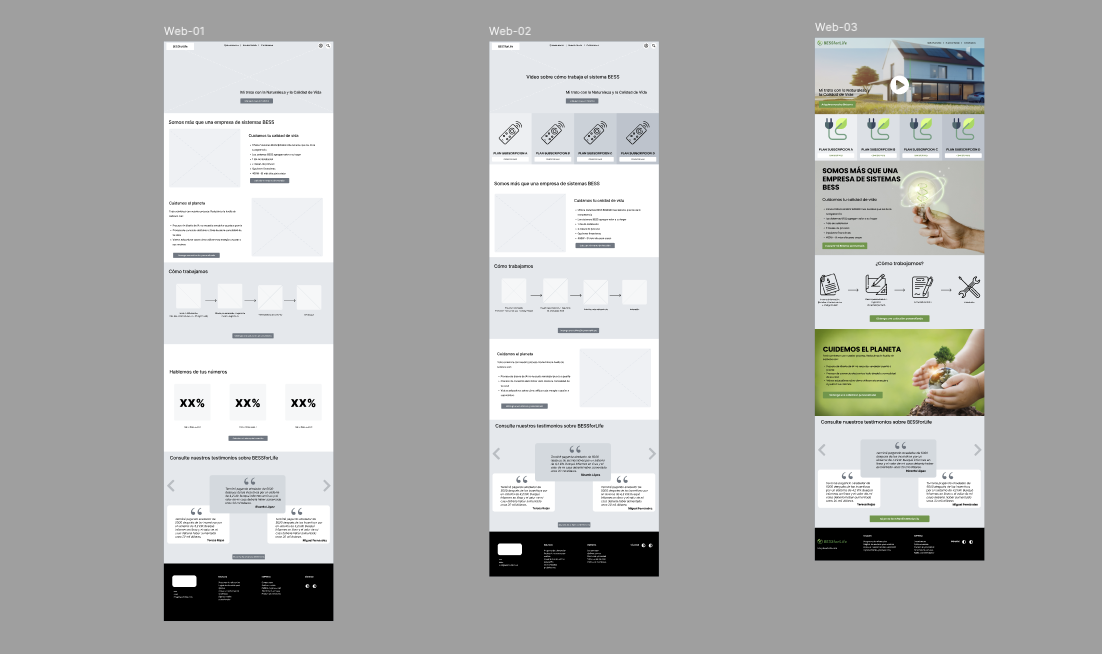
Website prototyping process
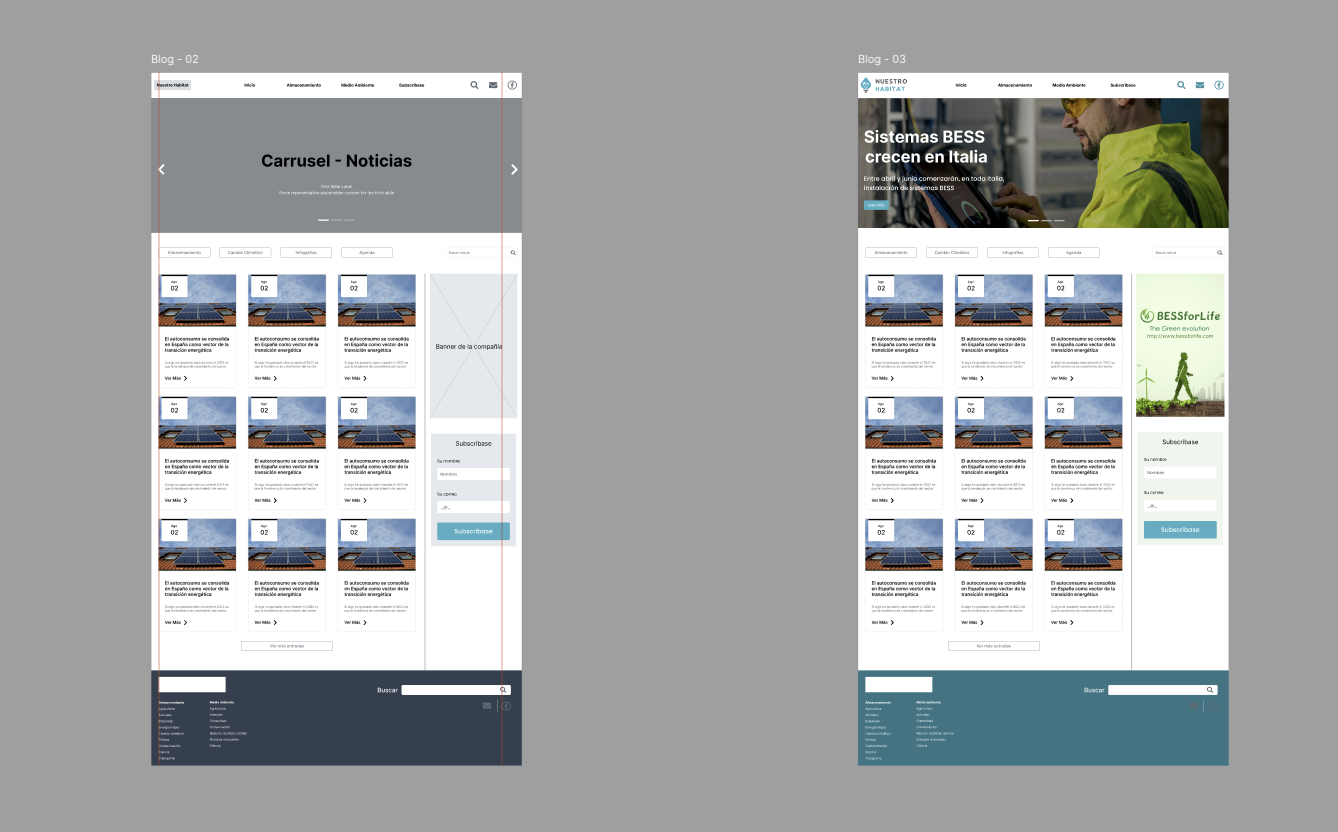
Blog prototyping — educational content platform
Customer Experience
Voice of Customer & Service Blueprint
Beyond the product interface, the project included a complete CX strategy — capturing the voice of customer and mapping the end-to-end service blueprint for the startup.
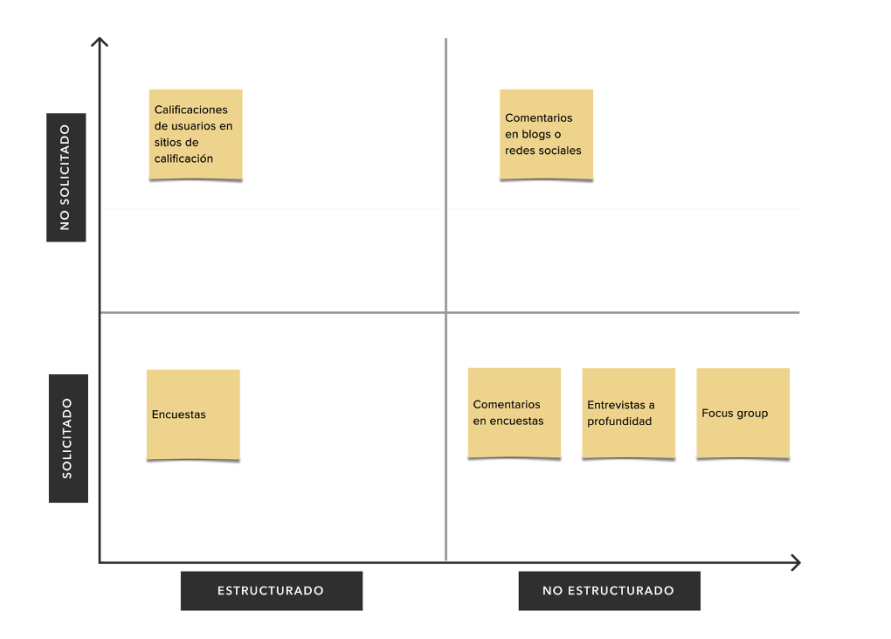
Voice of Customer strategy — feedback channels and measurement
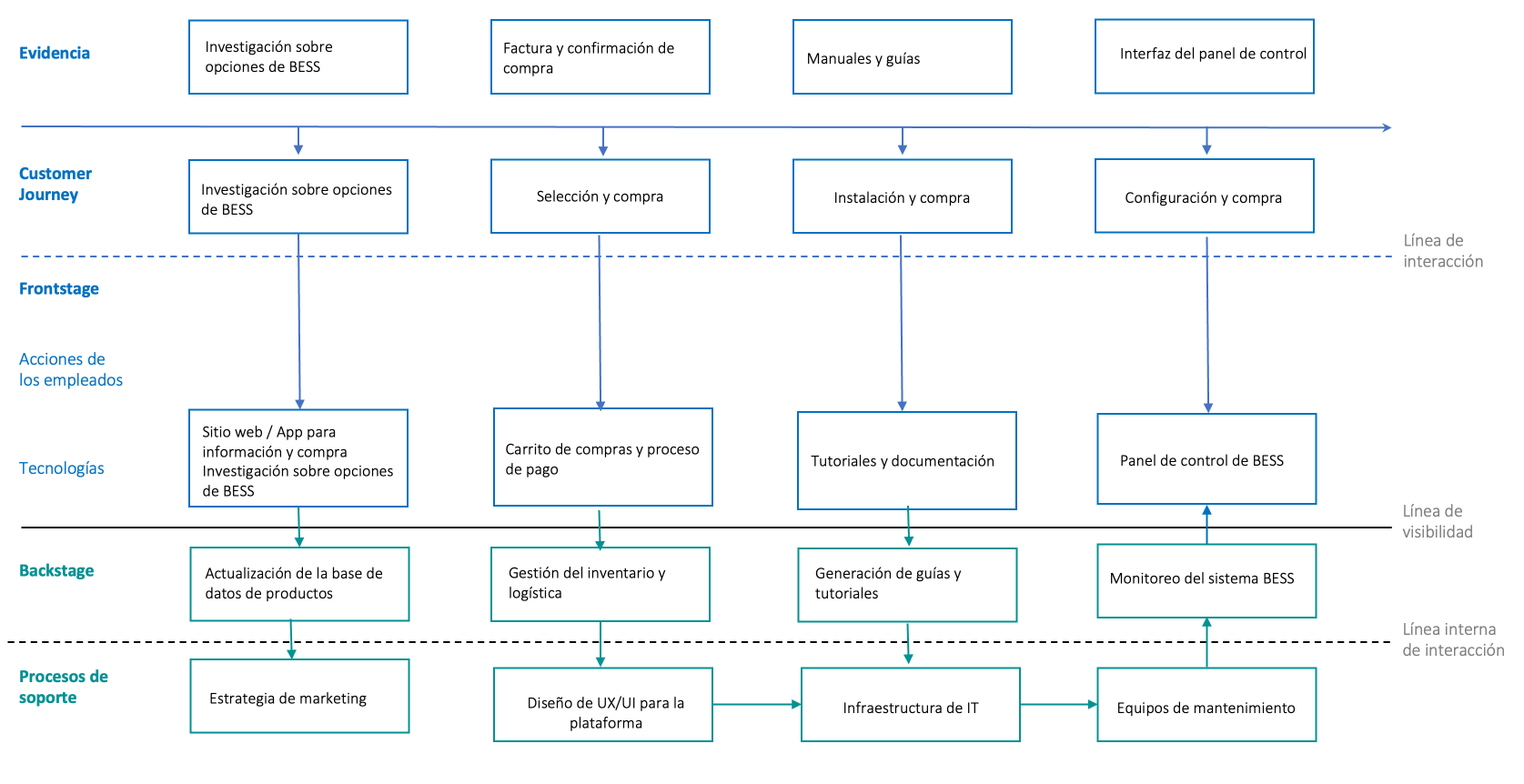
Service Blueprint — end-to-end service design for the startup
Results & Impact
Measurable Outcomes
Product Scope
4 products
app, website, blog, system
User Research
5 archetypes
research-backed personas
CX Strategy
End-to-end
VoC + service blueprint
Design System
Reusable
cross-product system
Reflections